


Gold
—







%0A$4,782.00/oz%20(down%20$39.00,...)
Gold at $4,782 and Silver at $80: Why We're Holding, Not Buying, Before Wednesday's Binary
TUESDAY, APRIL 21, 2026 · ATLANTA, GA
ALEX LEXINGTON
THE DAILY MARKET INTELLIGENCE EDITION
MARKET SNAPSHOT
| Gold Spot (XAU/USD) | $4,782.00/oz (down $39.00, -0.81% from prior close) |
| Silver Spot (XAG/USD) | $80.06/oz (down $0.46, -0.57% from prior close) |
| Gold/Silver Ratio | 59.7:1 — historically compressed (silver rich relative to gold; ratio was near 90:1 two years ago) |
| WTI Crude | $86.27/bbl (down from Monday intraday high of $88.80, -2.9%) |
| DXY (US Dollar Index) | 98.26 (down -0.03% in 24h) |
| 10-Year Treasury Yield | 4.26% (last confirmed April 17) |
| S&P 500 (SPY) | $7,109.14 prior close (April 20); futures +0.2% pre-market |
| VIX | ~18.87–19.12 (below 20 stress threshold) |
| COMEX Gold | 29,890 contracts traded; open interest 278,190 contracts (elevated vs. historical baseline) |
Gold opened the week under pressure after London sellers took the lead in overnight trade. The LBMA spot rate fell as far as $4,762 intraday before US buyers stepped in and partially recovered the losses. Gold's 24-hour range of $4,772.93–$4,833.09 illustrates the tension: a $60 intraday swing driven almost entirely by a single dominant variable, the US-Iran ceasefire expiring Wednesday April 23. COMEX open interest at 278,190 contracts remains elevated per CME Group data, while the CFTC's latest Commitments of Traders report shows net non-commercial gold longs at +162,526 contracts — approximately 58% of total open interest, near the heaviest notional positioning since January's all-time high above $5,595. Silver tracked gold's move with amplification: MCX silver in Mumbai dropped 1.69% to Rs2,52,793/kg per the Economic Times, consistent with spot's -0.57% decline in dollar terms.
---
MARKET CONTEXT
Gold did not sell off because the world turned bullish on the dollar. It sold off because of where we are on the calendar.
The two-week US-Iran ceasefire that briefly steadied oil markets expires Wednesday April 23 — 48 hours from today. Vice President Vance traveled to Islamabad over the weekend for a second round of talks after the first round on April 12 broke down over uranium enrichment timelines. The US proposed a 20-year suspension; Iran countered with five years. The gap did not close. On Sunday, the US Navy seized an Iranian cargo vessel in the Gulf, and Iran responded by firing on commercial vessels in the Strait of Hormuz. That sequence — a seizure, a counter-strike, and a ceasefire clock reading less than 48 hours — is the kind of setup where a single wire headline moves gold $100 in either direction before markets can respond.
The tape is priced for anxiety, not for resolution.
Oil confirms the read. WTI crude spiked to $88.80 Monday on Strait of Hormuz closure fears and has since pulled back to $86.27, with Brent in the $89–$90 range. When oil and gold both soften off their intraday highs on the same news cycle, that is not a de-escalation signal — it is crowded longs taking money off the table before a binary event. The VIX at 18.87 suggests equity markets have not fully priced in the geopolitical tail risk, but bond markets are watching carefully: the 10-year yield at 4.26% is holding steady while strong March retail sales (sixth consecutive monthly increase, core +0.41% month-over-month per advance estimates) gave the dollar modest support at 98.26.
This is the cross-asset picture of a market in a holding pattern.
Three developments from overseas today underscore that the underlying structural architecture remains intact, even as the short-term tape softens — and a domestic-only analyst would miss all three.
First, the CSOP Gold ETF (3030.HK) listed on the Hong Kong Stock Exchange this morning with initial assets under management of US$720 million, making it Hong Kong's largest physical gold ETF debut on record, per Reuters Asia. The fund is backed by physical gold stored in Hong Kong vaults with cash or in-kind creation and redemption. This represents a new source of structural demand that did not exist as of Friday's close. Second, the People's Bank of China extended its official buying streak to 17 consecutive months through March, adding 5 tonnes — the largest single-month addition since February 2025 — bringing total PBOC reserves to a record 2,313 tonnes (74.38 million ounces), per World Gold Council data. The PBOC has bought gold every single month since November 2024, regardless of spot price level. Third, the Economic Times reported that India's wedding-season demand is providing a floor beneath MCX's daily volatility, with above-average tax refunds this spring driving retail purchases ahead of the traditional May-June wedding period. India now operates 26 gold ETFs after launching another new one in March.
The World Gold Council titled its April 2026 market report "Eastern Inflows Counterbalance Western Outflows" — a direct statement on the demand asymmetry that is defining this market. March 2026 saw the largest North American gold ETF outflow on record at approximately $13 billion, snapping a nine-month inflow streak. That Western institutional rotation is being met, and in some respects offset, by the Hong Kong ETF launches, PBOC accumulation, and Indian retail appetite. The East-West split is real, and it matters for how we think about where price support lives.
The structural bids that drove gold to $5,595 in January have not disappeared. What has happened this week is that the near-term binary is preventing them from expressing cleanly.
---
MAVERICK'S TRADING JOURNAL
Both open positions remain open as of this morning.
The GLD BUY, entered April 2 at $437.82, is trading at $442.09 — up +0.98% from entry. The $425 stop has not been triggered. The $454 target is approximately 2.7% above current price. The position has been open 19 calendar days.
The SLV BUY, entered March 31 at $64.03, is the more notable story. The last confirmed close was $74.97 on April 17; today's estimated price based on silver spot is approximately $73.50. From the $64.03 entry, that is roughly +14.8% — materially above the $68.50 target set at entry. This is the eighth consecutive brief flagging SLV above its target zone. Andre confirmation is required before a close is logged to the P&L record. If confirmed at current levels, this would represent the system's largest unrealized gain to date — though the position remains open and unlogged pending Andre's close confirmation.
Today's brief carries NO CALL. This is a deliberate decision, not a failure to act. There are specific conditions in our trading rules that suspend new entries. A scheduled binary event within the 48-hour window is one of them. Adding a third position on the same Iran narrative that already drives GLD and SLV — when both remain open — would not be diversifying exposure. It would be tripling it on the same underlying binary. The disciplined choice is to wait for the ceasefire outcome before issuing a Thursday brief.
For readers who follow the options layer of this strategy: implied volatility on GLD and SLV options is elevated going into Wednesday's event. This is standard — the market pays up for optionality before scheduled risk events, then "vol crushes" immediately after resolution regardless of direction. A buyer of calls or puts today is paying peak premium for peak uncertainty. Even a correctly-directioned bet can underperform if IV collapses faster than the underlying moves. Professional options desks either sell premium into binary events, wait for the crush before entering directionally, or sit on their hands. Today is a sit-on-your-hands day.
---
THE TAKEAWAY
We have been in this business since 1977 — first in New York's Diamond District, now in Atlanta. I have watched gold move through oil embargoes, currency crises, two Gulf wars, a financial collapse, a pandemic, and a series of geopolitical inflection points that each looked, in the moment, like they might reshape the monetary order permanently.
The common thread through every one of those episodes: the first 48 hours around a binary event are the most expensive time to make a decision. Whether the event resolved toward escalation or de-escalation, prices normalized within days. The buyers who waited for clarity historically tended to enter at better levels than the buyers who front-ran the binary and paid widened spreads and elevated premiums on the wrong side of the first move, though past patterns do not guarantee future outcomes and individual timing results vary.
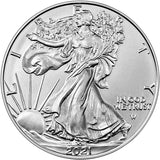
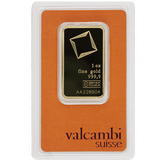
For clients asking about gold today: the structural case for owning physical gold is intact and, if anything, stronger than it was in January. PBOC buying, Hong Kong ETF launches, and a world in which central banks are diversifying reserves away from dollar-denominated assets are not short-term trades. They are decade-long transitions. Gold at $4,782 — with American Eagles, Canadian Maples, and Krugerrands available at approximately $4,902–$4,962 all-in, roughly $633–$693 below January's all-time-high pricing — is a patient buyer's market, not an emergency.
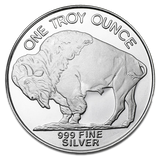
For silver stackers: $80.06 spot plus $3–$5/oz generic dealer premiums puts you at $83–$85/oz all-in. That is historically extended relative to where silver was even 18 months ago. Silver is in its sixth consecutive annual supply deficit per the Silver Institute, with 46.3 million ounces of shortfall forecast for 2026 driven by AI data center build-outs, solar panel manufacturing, and EV battery demand. The long-term case is real. But the gold/silver ratio at 59.7:1 is compressed into territory where silver has historically whipped back faster and harder than gold on adverse headlines. If silver breaks below $78 on a ceasefire flush Wednesday, that becomes a substantially more attractive physical entry than today's $80. If silver holds $80 through Wednesday and breaks higher, premiums will widen and waiting becomes costly — but that confirmation has not yet arrived. The signal for silver today is wait.
Watch Wednesday. We will have a Thursday brief with a cleaner setup on either side of the binary. The dominant variable to track: any wire story confirming ceasefire extension or breakdown moves gold $75–$150 in the first hour. Beyond that, FOMC April 28–29 is one week out, and major Q1 earnings reports today from 3M, GE Aerospace, Halliburton, Northrop Grumman, RTX, and UnitedHealth could introduce equity-side crosscurrents into the metals tape. The session to watch is Wednesday morning London open — that is historically when geopolitical event risk manifests first in gold pricing.
DISCLOSURE
This content reflects disclosed trading activity and market analysis for educational purposes. Alex Lexington does not manage client funds or provide personalized financial advice. Past performance does not guarantee future results. Always consult a licensed financial advisor before making investment decisions.---