


Gold
—










%0A$4,015.10/oz%20(down%20appr...)
Gold Closes Q2 at $4,015 — The Steepest Quarterly Decline on Record. Here Is What It Means for Physical Buyers.
TUESDAY, JUNE 30, 2026 · ATLANTA, GA
ALEX LEXINGTON
THE DAILY MARKET INTELLIGENCE EDITION
---
MARKET SNAPSHOT
| Gold Spot (XAU/USD) | $4,015.10/oz (down approx. $20, -0.5% from prior close) — day range $3,944–$4,038; sellers defended $4,040 aggressively at quarter-end |
| Silver Spot (XAG/USD) | $59.62/oz (up approx. $1.71, +2.95% from prior close) — modest counter-bounce; lone outperformer in the precious metals complex today |
| Gold/Silver Ratio | 67.3:1 — compressed slightly from 69.7 yesterday on silver's session bounce; widened materially from 62:1 mid-June, risk-off rotation signal intact over the quarter |
| Brent Crude | $72.40–$74.01/bbl (down approx. 1% from prior close) — consolidating near triangle formation; US-Iran Doha peace talk signals removing geopolitical premium |
| WTI Crude | $70.67/bbl (down approx. 1% from prior close) — down 19% for June, 24% for Q2; inflation-channel tailwind removed from the metals complex |
| DXY (US Dollar Index) | 101.35 — one-year high; up 2.14% over the past month; single largest headwind to metals prices at quarter-end |
| 10-Year Treasury Yield | 4.38% — structurally elevated; CME FedWatch now prices 37.4% probability of a July 29 rate hike, keeping the rate-channel pressure fully engaged |
| S&P 500 (SPY) | $738.44 (near 52-week range high of $760.40) — equities near highs with metals at quarterly lows; capital rotating away from metals, not a cross-asset risk-off flush |
| VIX | 18.41 — below the 20 stress threshold; moderate environment; safe-haven channel dormant today |
Q2 2026 did not end quietly. Gold has declined approximately 14% on the quarter, the steepest quarterly decline on record in modern precious metals data, with prices cross-verified across multiple data providers — the spread between readings reflects the intraday session range of $3,944–$4,038, not a data discrepancy. Silver declined more than 20% over both June and Q2. The CFTC's most recent Commitments of Traders report (released June 26) shows speculative net long positioning at 181,300 contracts — a modest increase from the prior week, meaning the professional speculative community is not aggressively capitulating at these levels. The People's Bank of China added 9.95 tonnes to gold reserves in May, extending its unbroken buying streak to 19 consecutive months and bringing total PBOC gold holdings to 2,331.52 tonnes, approximately 9% of China's foreign exchange reserves. The ECB's June 2026 International Role of the Euro report confirmed gold now represents approximately 27% of global reserve assets, surpassing US Treasuries at approximately 22%.
---
MARKET CONTEXT
Q2 2026 ended the way it ran — under the weight of a dollar at a one-year high and a Federal Reserve that, under Chair Warsh, spent the quarter removing every projected rate cut from its dot plot and replacing them with a median end-2026 rate of 3.80%. That rate-channel pressure has been the defining force since January 28, when gold printed its all-time high of $5,595/oz. From that peak to today's close near $4,015, gold has shed 28% of its value in five months.
That number — 28% — deserves to be held alongside what the rest of the world is doing with gold simultaneously.
The PBOC has bought gold every single month for 19 consecutive months, the longest standardized-disclosure buying streak since China began publishing monthly reserve data. The ECB just published a report confirming gold has overtaken US Treasuries as the largest single share of global reserve assets. Germany's Bundesbank holds 3,350 tonnes — the world's second-largest national gold reserve — and is fielding renewed parliamentary pressure to repatriate gold held at the New York Fed, citing geopolitical risk from US policy uncertainty. These are not the actions of institutions that believe gold is in a structural bear market. They are the actions of institutions that are buying what Western paper markets are selling.
That gap is the story of this quarter.
All three trading sessions today — Asia, London, US — trended lower or flat. There was no bullish reversal anywhere in the world. The Asian session saw thin liquidity and prices near $3,985–$4,000. London managed a modest recovery to $4,028 but could not hold above $4,040. The US session was capped by DXY hitting 101.35 — a one-year high — and by diplomatic signals from Doha where Tehran reportedly requested a US-Iran meeting, deflating the remaining geopolitical risk premium in both oil and gold. The combined result: sellers defended $4,040 through the close on the steepest quarterly decline in the recorded history of gold markets.
Silver offered the one exception to today's consensus. Silver spot bounced approximately 2.95% on the session, from a Monday reference near $57.91 to $59.62, compressing the gold/silver ratio from 69.7 to 67.3. The ratio had widened from 62:1 in mid-June as silver absorbed disproportionate selling pressure — the industrial demand thesis is especially sensitive to rate-hike expectations, which weigh on projected manufacturing activity and energy-transition investment. Today's silver counter-bounce is the first session since the June 17 FOMC meeting in which silver outperformed gold on a same-day basis. It is a data point, not a signal. But heading into Q3, it is worth watching.
---
MAVERICK TRADING JOURNAL
Today's call: NO CALL — POSITION STILL OPEN
Two positions remain open. Maverick's framework does not layer new entries while prior calls are active.
GLD Call — opened June 26 at $366 entry. GLD last closed at $368.94, approximately +0.8% above entry. That represents a meaningful pullback from Monday's reading near $375.00 — the position moved from 80% of the way to the $377 target on Monday to approximately 35% of the way there today. The target has not been hit. The stop at $358 has not been triggered, with $10.94 of cushion remaining, approximately 3.0% above stop. Today is trading day two of a three-to-five day window. The position is still profitable on a mark-to-market basis, but the target-approach thesis has weakened materially as three consecutive sessions of consensus-down-or-flat alignment have invalidated Friday's counter-confirm setup. Andre's close decision is live.
SLV Buy — opened March 31 at $64.03 entry. SLV last confirmed closing price is $53.28, approximately -16.8% unrealized. Today's silver spot bounce of +2.95% will likely improve the SLV closing print when June 30 data becomes available. The structural silver thesis remains mechanically intact: sixth consecutive year of global supply deficit, 2026 shortfall projected at 46.3 million ounces per the Silver Institute's World Silver Survey, with industrial demand from solar, EV, and electronics manufacturing providing a structural floor independent of the rate path. The speculative position-unwind that has compressed SLV from entry operates on a different time horizon than that supply-demand thesis. Andre's close decision on this position is also live.
Closed track record through Q2: GLD March -2.10%, GLD April -4.33%, GLD May -2.27%, GOLD spot June 8-9 +3.09% WIN. One win, three losses on closed positions. The June 8 WIN was the first. Current open positions resolve in Q3.
Why no new call today. Maverick's three-layer framework includes a Layer 3 override: when both overseas and US sessions agree on direction for three or more consecutive trading days, mean-reversion long signals are paused — not just reduced in confidence, but explicitly paused. Today is session three of consensus-down-or-flat alignment, the exact configuration the Layer 3 framework identifies as a trend to respect rather than fade. That override is independent of the Rule 6 stacking prohibition that already binds. Two rules, same answer: no new position.
The Q3 calendar resets this. NFP prints Friday July 3. CPI follows July 14. FOMC on July 29. Those are the moments when the rate-channel narrative either hardens or softens — and when fresh signals will be evaluated on their own merits.
---
THE TAKEAWAY
Physical buy window: OPEN.
Gold at $4,015/oz sits 28% below January's all-time high. Silver at $59.62 is more than 20% below where it started the quarter. The gold/silver ratio at 67.3 has widened significantly from mid-June's 62:1, reflecting silver's disproportionate quarterly selling pressure.
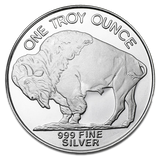
For a client buying 1-oz American Gold Eagles, Canadian Maple Leafs, Krugerrands, or Britannias at current spot through Alex Lexington, all-in cost runs approximately $4,135–$4,195 per coin — reflecting the cumulative Q2 drawdown of approximately 28% from January's all-time high. For silver stackers — American Silver Eagles, Maple Leafs, Britannias, or 90% junk silver bags — spot $59.62 plus $3–$7 premiums puts all-in retail cost at approximately $62.62–$66.62 per ounce. Silver Eagles run the upper end of that range.
The case for buying here is not a bet on next week's price. It is a structural observation: the same quarter that printed gold's steepest percentage decline on record also saw the PBOC buy for the 19th consecutive month, the ECB confirm gold surpassed US Treasuries as the world's leading reserve asset, global central banks post their strongest first-quarter buying pace on record (244–337 tonnes net per the World Gold Council's Q1 2026 Demand Trends report), and COMEX speculative positioning actually increase modestly rather than capitulate. India, after a brief slowdown driven by an import duty hike and a rupee that has weakened more than 7% year-to-date, showed renewed ETF inflows in June — the consumer-demand channel beginning to re-engage at depressed price levels.
Sovereign buyers, the ECB, the Bundesbank, and the CFTC's speculative community are not running for the exits. Quarter-end rebalancing flows are. Those are different things with different time horizons.
For DCA customers on scheduled purchase intervals, the Q2-close session represents the deepest cumulative entry level of 2026 for both metals on a percentage-from-prior-high basis — a structural context point, not a trigger date. For ratio-stackers watching gold/silver divergence, the multi-week trajectory from 62:1 to 67.3:1 signals silver remains under relative pressure — and the patient-accumulation thesis strengthens as that ratio drifts toward the historical 80+ zone.
We have been in this business since 1977, through eight recessions, three wars, three financial crises, and every flavor of interest-rate cycle the Fed has ever run. The strongest physical buying windows have always looked like this from the outside: scary, headline-driven, and apparently well-reasoned in the moment. A coin in segregated vault storage does not expire. It does not face time decay or IV crush. It does not have a stop loss. It sits in a bag with your name on it and accumulates structural exposure to the forces that have made gold the world's leading reserve asset for the first time since the Bretton Woods era.
That is not a trade. That is a position.
---
FORWARD OUTLOOK
The Q3 calendar begins Wednesday July 1 with Canada Day creating half-session liquidity in some North American trading channels — expect thinner price action tomorrow. JOLTS and ISM Manufacturing PMI follow in the first week of July. NFP prints Friday July 3, the binary risk event for both the open GLD Call and the broader rate-hike probability: a hot print reinforces the 37.4% July 29 hike odds and re-engages rate-channel pressure; a soft print reduces that probability and provides tactical lift. CPI July 14 and PPI July 15 define the Q3 rate narrative in full. FOMC on July 29 is the macro anchor for Q3. On the dollar: watch DXY for a sustained break below 100 — that would be the cleanest structural inflection signal for metals heading into summer. Gold's $4,000 psychological support held today by approximately $15 at the Kitco bid; a clean close below that level extends the downside risk case toward the $3,700–$3,800 reference cited by CPM Group. And watch the gold/silver ratio as Q3 opens: if silver's counter-bounce extends, the ratio trades back toward 65; if it fades, the path toward 75+ and ultimately the 80+ patient-accumulation zone remains open.
---
DISCLOSURE
This content reflects disclosed trading activity and market analysis for educational purposes. Alex Lexington does not manage client funds or provide personalized financial advice. Past performance does not guarantee future results. Always consult a licensed financial advisor before making investment decisions.
---