


Gold
—





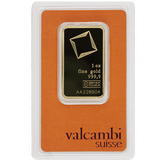




%0A$4,197.60/oz%20(down%20$13.1...)
Silver and Gold Hold the Surge: Why We're Watching, Not Trading, Through Binary Week
FRIDAY, JUNE 12, 2026 · ATLANTA, GA
ALEX LEXINGTON
THE DAILY MARKET INTELLIGENCE EDITION
---
MARKET SNAPSHOT
| Gold Spot (XAU/USD) | $4,197.60/oz (down $13.10, -0.31% from prior close — retaining the bulk of Thursday's 3.4% surge; intraday floor holding at $4,190) |
| Silver Spot (XAG/USD) | $66.49/oz (down $0.74, -1.10% from prior close — rebounded +5.83% from Wednesday's $62.83 reference but underperforming gold's retention today) |
| Gold/Silver Ratio | 62.79:1 — widened from 62.53 on June 11; silver underperforming gold's surge retention; mid-band reading, not yet a structural value signal in either direction |
| WTI Crude | $84.35/bbl (down -3.83% from prior close — sharp geopolitical-risk unwind on Trump's US-Iran peace deal announcement; Brent at $89.38 tracking toward $88 intraday) |
| DXY (US Dollar Index) | 99.85 — intraday range 99.64–99.91; holding below the 100.00 psychological level after yesterday's intraday breach; sub-100 DXY is the primary mechanical support for gold today |
| 10-Year Treasury Yield | 4.53% — down slightly from yesterday's 4.55% reference; real-yield pressure on gold modestly reduced but rate channel remains live and FOMC-binary-exposed |
| S&P 500 (SPY) | $739.04 (up $4.50, +0.61% from prior close of $734.54 — risk-on rally on "end of war hopes" running concurrently with gold's sticky-high consolidation) |
| VIX | 19.44 (opened 21.25, intraday range 19.36–22.59 — back below the 20 stress threshold from yesterday's 22.22; fear has compressed on Iran peace-deal optimism; mid-band within the 52-week range of 13.38–35.30) |
The cross-asset picture today is analytically revealing. Oil is unwinding sharply on Iran peace-deal news — draft language per Bloomberg includes lifting oil sanctions and Strait of Hormuz reopening within 30 days — and equities are up 0.61% on the same headline. By conventional logic, both of those moves should pressure gold: less geopolitical risk premium, less safe-haven demand, risk-on environment. Instead, gold is holding $4,190 and above, retaining the vast majority of Thursday's surge. When energy-channel risk unwinds and risk-on equities bid simultaneously and gold simply does not move lower — that is a structural signal worth reading carefully.
The People's Bank of China added 9.95 tonnes of gold in May for the 19th consecutive month, bringing total reserves to 2,331.52 tonnes — now 9% of China's $3.44 trillion in FX reserves, the highest FX allocation since November 2015, per World Gold Council data. H1 2026 global physically-backed gold ETF inflows reached $38 billion, the strongest semi-annual period since H1 2020, with holdings up 397 tonnes to 3,616 tonnes. Q1 2026 mine production at 885 tonnes was an all-time Q1 high, while producer all-in sustaining cost margins reached a record approximately $2,800 per ounce per Metals Focus. Record supply meeting record demand at record producer margins: that is the structural backdrop keeping gold sticky-high through days when multiple cross-asset signals point lower.
---
MARKET CONTEXT
Three trading sessions, three different regimes, and I want to walk through each one clearly — because understanding why the picture keeps shifting is more valuable than the price level alone.
Tuesday and Wednesday were rate-channel dominant. May CPI printed 4.2% year-over-year on June 10 — the third consecutive monthly acceleration and the hottest reading since April 2023. The ECB delivered a 25-basis-point hike on June 11, lifting its deposit facility rate to 2.25% in the first ECB tightening move in nearly three years. The DXY briefly broke above 100. Three major sessions agreed downward, with Asian, London, and US trading all running in the same direction. That three-sessions-agree configuration kept us on the sideline under the trend-respect framework — not because the sell-off wasn't real, but because the framework requires distinguishing an oscillating pullback from a trending decline. Tuesday and Wednesday were the latter.
Thursday everything flipped. Trump signaled a "very strong memorandum of understanding" on a US-Iran peace deal, and gold surged +3.4% in a single session — from the $4,068 reference to an intraday high near $4,225. That is the mean-reversion opportunity the framework is designed to capture when Layer 1 fires and Layer 3 is in oscillation rather than trend. I will say plainly: we did not capture it. The same trend-respect discipline that protected us from a short-side entry into that surge also kept us from entering the long side. The framework prioritizes capital preservation over signal capture in trending configurations. That is the correct asymmetric choice across the distribution of outcomes, and it is not a costless one. Yesterday's missed long-side opportunity is documented honestly.
Today is the digestion phase. Overnight, Asian markets held gold near $4,210–$4,220, confirming the geopolitical bid rather than reversing it. Tokyo domestic gold prices fell to 23,262 yen per gram — the year's lowest — but that is a currency-translation effect from Bank of Japan rate-hike expectations strengthening the yen, not a signal about USD-denominated gold demand. London opened and partially unwound Thursday's spike as European traders took some geopolitical risk premium off the table against concrete Iran-deal language. The US session has opened lower on continued CPI weight and the S&P rally, but the physical floor at $4,190 is holding.
The international context this week is genuinely unusual in its density. The Bank of Japan meets June 15–16 and is broadly expected to raise its policy rate from 0.75% to 1.0% — a move that would mechanically strengthen the yen, with cross-currency effects on gold running in both directions depending on how the dollar responds. The Fed meets June 16–17 with 99.3% no-change probability priced per CME FedWatch, but the bias-language shift from easing to neutral-or-tightening is the variable that matters directly for real-yield arithmetic and gold pricing. Geneva gold dealers are closed June 13–17 for the G7 Summit, reducing European physical-market liquidity through the same window that the two major central bank decisions land in.
And India's 15% gold import duty continues to dampen the world's largest retail gold market. The FY26 import bill hit a record $71.98 billion despite volume declining nearly 5% year-over-year — price-driven, not volume-driven — with projected demand moderation of 50–60 tonnes through the duty headwind. Japan's domestic gold weakness is mechanical. India's retail softness is policy-driven. But sovereign and ETF demand is accelerating in the same period. The divergence between retail cooling in Asia-Pacific and institutional acceleration in sovereign reserves and ETF flows is the defining structural dynamic of the first half of 2026.
When the floor is built by sovereigns accumulating at 19 consecutive months of pace, retail volatility has historically been absorbed rather than structural — though no demand floor is immune to macro regime shifts.
---
MAVERICK TRADING JOURNAL
Today's call: NO CALL.
Gold is down -0.31% from prior close. Silver is down -1.10%. Both are well below the documented signal thresholds — the system requires a 2–3.5% gold move or a 4–6% silver move before Layer 1 fires. The three-sessions-agree-down pattern has been broken by Thursday's surge and today's mixed consolidation, so the Layer 3 trend-respect override is no longer operative. We are back in oscillation. But oscillation without a Layer 1 trigger means there is nothing to action on the tactical side today.
Three conditions independently produce that conclusion:
First, no fresh percentage trigger has fired. Gold's -0.31% and silver's -1.10% are digestion moves, not fresh signal events. The Layer 1 arithmetic is clear.
Second, the open SLV position from March 31 is binding under Rule 6. That position was opened at $64.03. Today's SLV ETF closing reference is $57.66 — approximately -9.95% unrealized against entry. Silver spot rebounded +5.83% from Wednesday's $62.83 to today's $66.49, which is a meaningful recovery on spot, but the ETF print is the binding reference and it reflects silver's underperformance relative to gold through Thursday's surge. The gold/silver ratio has widened from 62.53 to 62.79, which is the diagnostic confirmation: when speculative money is uncertain about direction, silver underperforms because it is the higher-beta expression of the metals trade and lacks the sovereign-floor component that PBOC gold accumulation provides. The SLV position is open, it is in adverse territory, and the close decision is live. No fresh silver entry is permitted while it is open.
Third, four binary events inside five trading days — BoJ June 15–16, FOMC June 16–17, the Iran deal signing event, and Geneva dealer closures through the same window — make a derivative entry today disproportionately event-exposed. Any position opened today carries risk on multiple axes simultaneously. The EV math favors the trader who waits for at least one of those binaries to clear with directional clarity before committing capital.
On the June track record: the June 8 gold spot long closed +3.09% WIN on June 9 — the first closed win in the documented record. The overall closed-position record stands at 1 win and 3 losses, a 25% win rate. I report it every session because an honest track record is the foundation that gives any of this credibility.
The setup that would re-engage a long signal is a clean pullback of another 2–3% from today's level into the $4,070–$4,115 zone without the three-sessions-agree-down configuration re-asserting, and ideally after the BoJ and FOMC binaries have passed. That combination — Layer 1 trigger firing, Layer 3 in oscillation, compressed binary week behind us — is the configuration worth waiting for.
---
THE TAKEAWAY
For physical metal buyers, the honest call today is WAIT — but the reasoning matters more than the instruction.
Thursday was the buy window of the week. Gold at $4,068 plus typical dealer premiums of $120–$180 put a 1-oz American Gold Eagle, Canadian Maple Leaf, Krugerrand, Britannia, or Austrian Philharmonic at approximately $4,188–$4,248 all-in. That was -21% below the early-2026 record high. Silver at $62.83 plus $3–$7 premiums put 1-oz American Silver Eagles and generic rounds at approximately $66–$70 all-in, with 90% junk silver bags at the lowest premium per troy ounce anchored on the same spot. Those windows are narrower today. Gold at $4,197.60 plus premiums puts all-in cost at approximately $4,317–$4,378 per 1-oz coin — still -19% below the record high, but 3.18% more expensive than Thursday's close. Silver at $66.49 all-in is approximately $69.50–$73.50 per ounce.
The WAIT call for tactical front-loaders is rooted in the binary week, not in the structural picture. The structural case for physical gold and silver in segregated vault storage has not weakened — it has accelerated by several measures. PBOC buying for 19 consecutive months at the largest single-month addition since December 2024, to a record 9% FX allocation. H1 ETF inflows the strongest in five years. Q1 mine supply at an all-time high with producer margins at records. The floor is not in question. The timing is.
For DCA customers on scheduled intervals, continue your intervals. Today's entry is mechanically slightly less favorable than Thursday's but still meaningfully below the record high. The discipline of accumulating through binary weeks rather than pausing for resolution is precisely the discipline that the PBOC is executing at a sovereign scale. That is not a coincidence — it is the same underlying logic applied at different portfolio sizes.
For buyers considering their first physical metals purchase: we have been operating since 1977, first in New York's Diamond District, now in Atlanta. We have seen rate cycles, geopolitical premiums, and central bank accumulation phases intersect in exactly this pattern before. Historically, consolidation entries have compared favorably to waiting for the all-clear — though past patterns carry no assurance of future results. The binary week ahead is noise against the multi-year structural thesis. If you are considering a first physical metals purchase, our segregated vault storage program is available to explore on your own schedule — reach out to learn more.
---
DISCLOSURE
This content reflects disclosed trading activity and market analysis for educational purposes. Alex Lexington does not manage client funds or provide personalized financial advice. Past performance does not guarantee future results. Always consult a licensed financial advisor before making investment decisions. Track record referenced above: 4 closed positions (3 losses, 1 win — 25% win rate, P&L record starts 2026-03-10); 1 open position (SLV BUY from 2026-03-31 at $64.03, approximately -9.95% unrealized via SLV ETF $57.66 — does not count until confirmed close per Rule 4). Today's call: NO CALL — no fresh Layer 1 trigger, Rule 6 open SLV position binding, Rule 5E compressed binary week (BoJ June 15–16, FOMC June 16–17).---