


Gold
—









%0A$4,538.54/oz%20(down%20~$6,%20...)
Gold and Silver Hold Ground as Iran Ceasefire Optimism Fades — What the Asian Session Reversal Tells Physical Buyers
TUESDAY, MAY 26, 2026 · ATLANTA, GA
ALEX LEXINGTON
THE DAILY MARKET INTELLIGENCE EDITION
---
MARKET SNAPSHOT
| Gold Spot (XAU/USD) | $4,538.54/oz (down ~$6, -0.14% from prior close) — holding above $4,500 critical support; 144-day moving average already broken to the downside; possible bearish head-and-shoulders top pattern in formation |
| Silver Spot (XAG/USD) | $75.68/oz (down $2.41, -3.07% from prior close) — sharper single-session pullback reflects Iran-deal reversal; structural +129% YoY trend intact |
| Gold/Silver Ratio | 59.9:1 — compressed inside the historical value range; below 60 signals silver is structurally cheap relative to gold on a multi-decade basis |
| Brent Crude | $98.11/bbl (up $0.87, +0.89% from prior close) — partial recovery from Monday's -5.62% collapse on Hormuz optimism; ceasefire-on-"life-support" narrative restores modest disruption premium |
| DXY (US Dollar Index) | 99.00–99.11 — recovered above 99.00 at London open, reversing prior session's slide; still well below 100.26–101.14 key resistance; 200-period EMA support at 98.88 |
| 10-Year Treasury Yield | 4.51% — multi-month elevated band; steady today, consistent with range-bound consolidation across asset classes |
| S&P 500 (SPY) | ~$746.37 pre-market (US markets closed Monday for Memorial Day; last confirmed close $745.70 May 22) — mildly positive into Tuesday's COMEX reopen |
| VIX | 16.68 — below the 20 stress threshold; no safe-haven panic; gold's flat-to-down session is dollar-strength- and Fed-uncertainty-driven, not fear-driven |
Gold's intraday range today spans $4,529–$4,563, bracketed by $4,500 critical support below and $4,580 intraday resistance above. The LBMA's most recently available London PM fix stands at $4,482.85 as of May 20; the May 26 fix is pending IBA licensing publication. According to the CFTC's latest Commitments of Traders report for positions as of May 19, speculative net long gold positioning stands at 171,600 contracts, rising from 163,300 the prior week — reflecting cautious managed-money re-entry rather than peak-conviction accumulation. COMEX gold volume for today's session has not yet been released in CME Group's daily bulletin.
On the ETF side, GLD closed at $413.82 on May 25 (prior close $416.99, a -$3.17 move on the session). Global gold ETF assets under management reached $615 billion in April, with $6.6 billion in net monthly inflows, according to World Gold Council data. GLD posted $1.3 billion in weekly net inflows in the most recent reported week, with outstanding units rising approximately 0.8 percent week-over-week. SLV closed at $68.36 on May 25 (prior close $69.45). The Shanghai Metals Market reports Shanghai silver wholesale premiums at up to $8 per ounce over the London benchmark — a direct signal that Western paper prices are currently clearing below Asian physical market levels.
---
MARKET CONTEXT
Gold is approximately 13 percent below its early-2026 record high. It has broken below the 144-day moving average. Kitco analysts have flagged a possible bearish head-and-shoulders top pattern forming on the chart. Those are the technical facts, and they deserve honest acknowledgment.
The structural picture and the technical picture are running in opposite directions — and for physical buyers, that divergence is the entire story.
On the structural side, the People's Bank of China added 8 tonnes to official gold reserves in April, the 18th consecutive monthly purchase and the largest single-month addition since December 2024, lifting total holdings to 2,322 tonnes representing 9 percent of total reserves. World Gold Council data puts global central bank net purchases at 244 tonnes in Q1 2026, above the five-year quarterly average and on pace for a third consecutive year above 1,000 tonnes annually. The National Bank of Poland was the quarter's largest single buyer at 31 tonnes, bringing its total to 582 tonnes.
The most strategically significant development this week received almost no mainstream financial coverage. ECB gold reserves have officially surpassed the euro as the second-largest global reserve asset, at 16,346,000 fine troy ounces. That is not a tactical trading signal — it is a structural reordering of the international monetary system. Institutional allocators required to hold reserves proportional to benchmark composition now face a mechanically changed mandate.
The Hong Kong development deserves equal attention. A new Hong Kong gold clearing house launches in July with a formal SGE cooperation pact, explicitly designed to build a renminbi-based Asian gold market. HKEX is simultaneously consulting on a physical-delivery USD gold futures relaunch. Asian demand already represents approximately 60 percent of annual global gold demand, according to Hong Kong Financial Secretary Paul Chan. When the price-formation infrastructure for that demand base begins shifting from London and Chicago toward Hong Kong and Shanghai, the implications for gold's structural floor are not tactical. They are permanent.
None of that changes what gold's chart looks like this morning. $4,500 is critical near-term support, and a break below it would open the technical path of least resistance to materially lower levels. That risk is real and requires honest disclosure.
The overlay — sovereign physical accumulation accelerating while retail paper demand throttles, Asia building its own price-formation infrastructure, mine supply declining quarter-over-quarter — is what defines the environment. Central banks do not call their brokers when the chart looks ugly. That divergence is the structural floor running underneath today's range-bound tape.
---
MAVERICK TRADING JOURNAL
No new call today. Rule 6 holds: two positions open, no stacking permitted.
The GLD Call opened May 15 at $418. GLD's May 25 close was $413.82, down -1.00 percent unrealized. Target $431 is untriggered. Stop $409 is untriggered, with a $4.82 cushion below today's close representing 1.17 percent. That cushion improved modestly from yesterday's $4.72 mark. The buffer remains thin — if gold spot breaks $4,500, GLD likely tests $409 quickly.
The SLV Buy opened March 31 at $64.03. SLV's May 25 close was $68.36, up +6.76 percent unrealized. Silver's -3.07 percent session today is a single-day whipsaw inside a structural uptrend that is up 129 percent year-over-year. The position has absorbed exactly this kind of volatility throughout its hold.
Beyond Rule 6, no Layer 1 signal has fired. Gold's 24-hour change is approximately -0.1 percent to flat — well below the 2–3.5 percent gold signal threshold. Silver's -3.07 percent session is meaningful but inside the 4–6 percent silver Layer 1 noise band, not above it. The framework is explicit: signals fire on threshold moves, not intraday whipsaws.
The more instructive discipline today is the session divergence read. Yesterday's brief held off any entry because the Asian session's +1.4 percent gold rally on Iran-Hormuz ceasefire optimism was unverified by Western liquidity, with London and US markets both closed for bank holidays. The explicit note was that sharp reversals were possible at Tuesday's open. Monday's overnight reports of renewed US defensive strikes on Iranian targets, alongside Trump's characterization of the ceasefire as being on "life support," have partially reversed that move. Gold opened the Asian session this morning near $4,538, briefly tested $4,580, then pulled back to the $4,529–$4,536 range as the optimism faded.
That is the precise outcome the Layer 3 protocol was designed to avoid trading into. The trader who chased yesterday's Asian print by entering calls at Tuesday's open paid the gap-up and immediately faced the fade. Discipline is most valuable when it costs something in the short term.
The June 10 CPI release and the June 16–17 FOMC meeting remain the next scheduled catalysts. CME FedWatch currently prices June at 99.2 percent hold, but Kevin Warsh's first meeting as Fed Chair — facing four dissenting votes from April, the most since 1992, and explicit presidential pressure to cut — carries a reaction-function uncertainty the market cannot fully price until it arrives.
---
THE TAKEAWAY
Physical Buy Window: OPEN
Gold is approximately 13 percent below its early-2026 record high. For clients buying one-ounce American Gold Eagles, Canadian Maple Leafs, Krugerrands, Britannias, or Austrian Philharmonics, today's gold spot range of $4,529–$4,563 plus typical dealer premiums of $120–$180 puts the all-in cost at approximately $4,649–$4,743 per coin. That is materially below the conflict-era peaks and inside the mean-reversion accumulation range where physical buyers have historically found value.
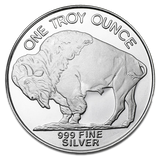
Silver at $75.68 spot plus $3–$5 generic premiums puts rounds and generic silver at approximately $79–$81 per ounce all-in. American Silver Eagles with $5–$7 premiums run $81–$83 per ounce all-in. At a gold/silver ratio of 59.9:1, silver is inside the historical value range — and below 60 it is signaling the structurally cheaper allocation on a multi-decade basis. The Shanghai silver wholesale premium of up to $8 per ounce over the London benchmark is not noise; it is arbitrage activity pointing at a real price discrepancy between Western futures and Asian physical demand.
For clients on DCA schedules, today's modest pullback is exactly the environment that program was structured to capture. For physical buyers, there is no theta decay, no stop discipline, no option that expires worthless. A coin in segregated vault storage at Alex Lexington is mechanically participating in the structural floor that central banks around the world are reinforcing — 18 consecutive months of PBOC accumulation, 244 tonnes of global central bank net buying in Q1 alone, Eurozone gold officially surpassing the euro as a reserve asset, mine supply down 8.64 percent quarter-over-quarter.
Maverick's own accumulation framework for this week uses three stages: the current $4,529–$4,538 range, any test of $4,500 support, and the post-June 10 CPI / post-June 16–17 FOMC clarity window. Physical buyers construct entry criteria based on their own timeline and cost basis.
We have been buying and storing gold and silver for clients since 1977, first from the Diamond District in New York, now from Atlanta. We have seen technically challenged charts and structurally strong fundamentals coexist before. Markets that feel uncomfortable to enter have sometimes offered better entry conditions in hindsight — though that is not a reliable rule, and timing risk is real at any specific level. Reach out if you would like to discuss current pricing or open a vault storage account.
---
DISCLOSURE
This content reflects disclosed trading activity and market analysis for educational purposes. Alex Lexington does not manage client funds or provide personalized financial advice. Past performance does not guarantee future results. Always consult a licensed financial advisor before making investment decisions.
---