


Gold
—








%0A$4,388%E2%80%93$4,392/oz%20(down%20...)
Silver Holds Firm While Gold Breaks $4,400 — What the Stop-Out Tells You About Discipline
THURSDAY, MAY 28, 2026 · ATLANTA, GA
ALEX LEXINGTON
THE DAILY MARKET INTELLIGENCE EDITION
---
MARKET SNAPSHOT
| Gold Spot (XAU/USD) | $4,388–$4,392/oz (down ~$64, -1.44% from prior close) — broke below $4,500 support and the $4,400 round level; now approximately 14% below early-2026 record high; bearish H&S top pattern playing through; next major levels $4,300 then $4,150–$4,200 |
| Silver Spot (XAG/USD) | $73.19/oz (down $1.44, -1.94% from prior close) — single-session noise inside an intact structural uptrend; Shanghai wholesale premiums running 12–13% above LBMA spot; well within the daily noise band, not a directional signal |
| Gold/Silver Ratio | 59.9:1 — widened from ~55:1 mid-May compression; rebounding but still inside historical value range; silver remains structurally cheap on a multi-decade comparison |
| Brent Crude | $96.30/bbl (up +2.13% from prior close — Iran strike reversal premium; May 25 US strikes on missile launch sites driving supply disruption pricing) |
| DXY (US Dollar Index) | 99.28 — still below the 100.26–101.14 key resistance band; mildly firm but not at an extreme that mechanically forces gold lower |
| 10-Year Treasury Yield | 4.50% (+0.02% from prior session) — holding inside the elevated multi-month band; steady yields offered no fresh impulse today |
| S&P 500 (SPY) | $751.25 prior session close (high $753.90, low $748.22; risk-on tone; equity tape not signaling safe-haven panic) |
| VIX | ~17.00 (below the 20 stress threshold — gold's decline is rate-channel structural, not panic-driven; reduced fear environment) |
All three trading sessions agreed today on direction. Asian markets traded a quiet $4,400–$4,420 range overnight, establishing the high of the day with no reversal — a bearish read when SGE physical demand should theoretically provide a floor. London confirmed the move rather than absorbing it: gold broke $4,400 and printed $4,383.04 during the London session, with no morning auction reversal bid materializing. US COMEX opened near $4,388–$4,392 without a counterbalance bid, acting as follower rather than leader.
Cross-asset context reinforces the rate-channel story. Oil rising +2.13% on the Iran reversal feeds inflation expectations and Fed hawkishness simultaneously. Treasury yields steady at 4.50% maintain opportunity-cost pressure on non-yielding metals. The VIX's subdued read near 17 confirms this is not a flight-to-safety unwind but a deliberate, structural repricing driven by the macro composite.
On the ETF side, GLD tracked the spot move and now prices around $408, against a prior-session close of approximately $414. Western gold ETF flows remain in sustained outflow territory — GLD has seen roughly $375 million exit in the past five trading days, part of a broader three-month trend the World Gold Council characterizes as Eastern inflows counterbalancing Western outflows. The structural bifurcation between paper and physical is not new. Today it is visible in real time.
---
MARKET CONTEXT
The macro composite that broke this market did not arrive overnight. It accumulated in layers since mid-May.
The foundation was April CPI printing at 3.8% year over year on May 12 — a three-year high, with energy accounting for more than 40% of the headline gain and shelter up 0.6% month over month. The April 28–29 FOMC held rates at 3.5%–3.75% but produced an 8-4 dissent split, the most divided vote since October 1992. One member wanted a cut. Three opposed the easing bias in the statement language. New Fed Chair Kevin Warsh now faces that fractured committee at the June 16–17 meeting with CME FedWatch pricing 99%-plus hold probability and a meaningful 14.8% July hike probability surfacing in the curve — the highest hike pricing this cycle has carried.
Then came May 25. US strikes on Iranian missile launch sites reversed the ceasefire optimism that had partially underpinned gold the prior week. The IRGC reportedly claimed a retaliatory strike on a US airbase. Negotiations and active strikes are now running in parallel. Brent responded by rising to $96.30 — and here is the dual-signal paradox worth understanding: oil higher should support gold via the inflation-hedge channel. Today it did the opposite. The energy shock feeds inflation expectations, which reinforces higher-for-longer rate expectations, which increases the opportunity cost of holding non-yielding gold. The rate channel dominated.
The result is gold spot at $4,388 — approximately 14% below the early-2026 record high — with all three trading sessions agreeing on the direction.
The international picture carries its own structural signal. The People's Bank of China has confirmed 15 consecutive months of gold accumulation at an estimated 2,200-plus tonnes total. Shanghai Gold Exchange physical silver premiums are running 12 to 13% above LBMA spot. Hong Kong wholesale silver bars trade at up to $8 per ounce above the London benchmark. These are not transient arbitrages — they represent a structural East-West physical decoupling that has persisted through the entire 2026 macro composite. The institutional architecture to formalize that decoupling is being built in real time: the HKEX renminbi-based gold clearing house is scheduled to launch in July 2026, positioned explicitly as the Asian benchmark challenger to LBMA. Dubai's DGCX is preparing a dirham-denominated, physically deliverable gold contract. The Bundesbank holds 3,352 tonnes — roughly 1,200 of them stored in New York — and German officials are renewing repatriation calls amid heightened US geopolitical tensions.
Western paper is selling. Eastern physical is accumulating. That bifurcation is the dominant story beneath today's technical breakdown.
---
MAVERICK TRADING JOURNAL
The GLD call from May 15 has stopped out today. Entry was $418. Stop was $409. GLD ETF closed the prior session at $408.49 — $0.51 below the documented stop. The position is closed at a loss of -2.27%.
I want to be precise about what this means and what it does not mean.
What it means: the stop worked exactly as designed. On May 15, the brief documented the entry, the thesis, the stop, and the target. The stop at $409 was the price below which the original thesis — mean-reversion long from oversold conditions with gold structurally bid by central bank accumulation — was structurally invalidated. It was not moved downward after the fact. It was not treated as a suggestion. When GLD printed $408.49, the stop triggered, the position closed, and the loss is logged in the P&L record this session.
What it does not mean: it does not open a door for an emotional re-entry on gold. The rule is explicit. The trader who just stopped out is the most dangerous version of themselves — adrenaline, the desire to recover capital, the wish to be right about the original thesis. These are the conditions that produce undisciplined entries that compound losses. Today's call is NO CALL on gold.
The broader track record: three consecutive GLD long positions have now stopped out — March at -2.1%, April at -4.33%, May at -2.27%. The win rate on closed positions is 0%. That number is published here because a track record that conceals losses is not a track record. It is marketing. Three sequential losses on gold longs through an active US-Iran conflict, a historically divided FOMC, and April CPI at a three-year high are exactly the kind of documentation that either earns long-term credibility or reveals a broken system. We will find out which.
The SLV BUY from March 31 at $64.03 remains open. SLV ETF is approximately $78.00 — an unrealized gain of approximately +21.83%. Silver's -1.94% session today is daily noise inside an intact structural uptrend. The Shanghai and Hong Kong premium structure, the gold/silver ratio at 59.9, the CFTC speculative positioning lighter than gold's — the structural drivers have not changed. The open position stays open until Andre confirms close. Unrealized gains do not count until they are realized.
---
THE TAKEAWAY
Here is the distinction that matters most for anyone reading this brief as a buyer of physical gold and silver.
The derivative position stopped out because the derivative framework requires it: documented stops, honoring them without exception, no emotional re-entry. That framework is appropriate for leveraged, time-sensitive instruments where a loss can compound quickly and discipline is the only protection.
The physical buyer's framework is structurally different. A 1-oz American Gold Eagle in segregated vault storage at Alex Lexington does not pay theta. It does not face a stop-loss trigger. It does not depend on session confirmation. Its value on any given Thursday morning is not the relevant metric. The relevant metric is the structural floor underneath the price — and that floor has not moved.
That floor: the PBoC accumulating for 15 consecutive months at an estimated 2,200-plus tonnes. Central banks on pace for a second consecutive year of 1,000-plus tonne net buying, per the World Gold Council. Eurozone gold reserves now ranking above the euro as the second-largest reserve asset in the Eurosystem. The HKEX renminbi clearing house launching in July. Q1 mine supply down 8.64% quarter over quarter on a structural exploration deficit. MKS PAMP has publicly projected $5,800 year-end 2026 on stagflationary structural pressures — one analyst's view, not a consensus, and analyst year-end targets carry no predictive guarantee. None of those structural inputs changed today.
What changed today is that gold spot is approximately 14% below the early-2026 record high. That makes the physical buy window wider, not narrower.
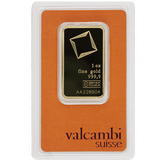
For gold buyers specifically: spot $4,388 plus typical dealer premiums of $120–$180 puts all-in cost on 1-oz Eagles, Maples, Krugerrands, and Britannias at approximately $4,508–$4,568 per coin — roughly 3% to 4% below Tuesday's reference range. For DCA programs on scheduled intervals, the pullback is doing exactly what the program is designed to capture. Traders watching this range have historically split entries across levels — a portion near current levels, a portion reserved for any test of the $4,300 psychological level, and a portion held for post-June 10 CPI and June 16–17 FOMC clarity. That's the staging Maverick uses in its own journaled accumulation, not a recommendation.
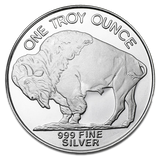
For silver: spot $73.19 plus $3–$5 generic premiums puts all-in cost at approximately $76–$78 per ounce for generic rounds. American Silver Eagles — IRA-eligible, highest recognized-coin liquidity — run $78–$80 all-in with $5–$7 premiums. The gold/silver ratio at 59.9 remains inside the historical value range where silver is structurally cheap relative to gold on a multi-decade comparison. Shanghai's 12–13% physical premium and Hong Kong's $8-per-ounce premium above London are the market telling you that Western paper is underpricing physical silver. Junk silver and generic rounds have historically been the value plays for stackers watching this range. American Silver Eagles carry IRA-eligibility and recognized-coin liquidity — the tradeoff between the premium paid and those features is a personal calculation.
We have been in the Diamond District since 1977. We have watched gold fall 14% before. The discipline on the trading side is: log the loss and wait. The discipline on the physical side is: accumulate through the pullback because the structural floor is intact.
---
FORWARD OUTLOOK
No major scheduled macro releases fall on May 28 — no FOMC, CPI, NFP, or PPI. The calendar's next significant binary is the May CPI release on June 10 at 8:30 AM ET, followed by the June 16–17 FOMC — the first chaired by Kevin Warsh, who will face the most divided committee since 1992 under explicit political pressure for cuts with a 14.8% July hike probability already in the curve. Between now and those events, the Iran ceasefire trajectory remains the unscheduled binary: any escalation re-prices oil sharply and the rate-channel pressure on gold persists; any clean de-escalation extends that pressure via oil collapse and dollar strength. On the technical side, $4,300 is the next meaningful support level on gold spot; $4,150–$4,200 marks the early-2026 breakout zone if the bearish head-and-shoulders target plays through. Session structure stabilization — Asian or London beginning to absorb the selling rather than confirm it — is the prerequisite before any fresh mean-reversion framework re-engages on gold. The July HKEX renminbi clearing house launch is the structural institutional milestone to watch beyond this week's tape.
---
DISCLOSURE
This content reflects disclosed trading activity and market analysis for educational purposes. Alex Lexington does not manage client funds or provide personalized financial advice. Past performance does not guarantee future results. Always consult a licensed financial advisor before making investment decisions.
---
Read more
Gold spot $4,538/oz, silver $75.68/oz as Iran-deal optimism fades overnight. Here's what the Asian session reversal means for physical buyers today.
Read more
To our supportive clients and friends — after fifty years, SECURE is open.
After three generations of stewarding precious metals for Southeastern families, we are opening SECURE — private vault storage in Atlanta, fully insured.
Read more