


Gold
—






%0A$4,715.20/oz%20(down%20$33.52,%20...)
Gold Spot at $4,715 While Oil Surges 7%: What the Decoupling Means for Physical Buyers
MONDAY, APRIL 13, 2026 · ATLANTA, GA
ALEX LEXINGTON
THE DAILY MARKET INTELLIGENCE EDITION
MARKET SNAPSHOT
| Gold Spot (XAU/USD) | $4,715.20/oz (down $33.52, -0.67% from Friday's $4,748.72 close) |
| Silver Spot (XAG/USD) | $74.09/oz (down $1.67, -2.21% from prior close) |
| Gold/Silver Ratio | 63.6:1 — neutral territory (compressed from ~104:1 earlier this year) |
| Brent Crude | $101.67/bbl (up +6.79% from prior close — Strait of Hormuz blockade shock) |
| DXY (US Dollar Index) | 98.74 (+0.09%) |
| 10-Year Treasury Yield | 4.39% (surging intraday; closed Friday at 4.31%) |
| S&P 500 (SPX) | ~6,781 (down -0.52% intraday — risk-off context) |
The headline number on Monday morning is not gold or silver. It is WTI crude at $103.40 per barrel, up +7.07% after the collapse of US-Iran talks and the announced naval blockade of the Strait of Hormuz. The oil move is extreme by any historical measure. What makes it directly relevant for precious metals buyers is that gold moved in the opposite direction.
Gold settled near $4,715.20 this morning — confirmed via Kitco spot pricing and corroborated against the LBMA London session — while oil surged. CME Group data shows COMEX volume is elevated but orderly; this is not panic selling. The People's Bank of China reported its 17th consecutive month of sovereign gold purchases, per World Gold Council tracking. The Shanghai Gold Exchange premium stood at +$0.29/oz over London — a modest but persistent signal that Chinese physical demand is not flinching despite the headline price weakness. Perth Mint reported gold sales up 120.7% year-over-year in its most recent monthly data, and Dubai physical demand remained elevated at AED 572.25/gram despite regional conflict proximity, per Gulf News reporting.
The 10-year Treasury yield has surged from 4.31% at Friday's close to 4.39% intraday — a move bond historians will note ends the longest yield curve inversion in US history. Net speculative long positions in gold futures, per the latest CFTC Commitments of Traders report, warrant close monitoring this week for any meaningful reduction in managed-money longs that could accelerate the selloff.
---
PHYSICAL BUY WINDOW
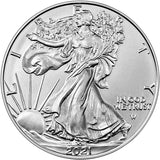
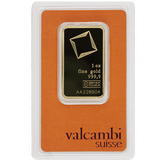
Gold has pulled back -2.9% from its April 8 intraday high of $4,856 to today's $4,715.20. That retracement sits squarely within the 2–3.5% swing range where physical buyers have historically found value in this bull cycle. For clients buying Gold Eagles, Maples, or Krugerrands through Alex Lexington, a one-ounce Gold Eagle at $4,715 spot plus typical dealer premiums of $120–$180 puts the all-in cost at approximately $4,835–$4,895 per coin — roughly $30–$60 cheaper than Friday's close and approximately $140–$160 cheaper than the April 8 peak.
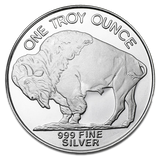
Silver is pulling back harder. At $74.09/oz spot, generic silver rounds with typical premiums of $3–$5/oz land at approximately $77–$79 per ounce all-in. The gold/silver ratio at 63.6:1 is neutral — not the screaming accumulation signal that emerges above 80:1 — but the ratio's compression from 104:1 earlier this year reflects a structural revaluation of silver that is far from finished. For 90% junk silver buyers, dealer supply has been adequate and premiums stable.
The official posture for this window: ACCUMULATE GRADUALLY. The pullback is real, the structural case is intact, but the Hormuz blockade introduces near-term binary event risk that argues against committing large lump sums at a single price. For physical accumulators, buying on weakness in tranches has historically aligned with how value buyers have approached similar pullback windows.
---
OPINION
I want to be direct about what is happening in the gold market today, because it is the kind of session that confuses first-time precious metals buyers and occasionally shakes out people who should be holding.
Gold is falling on a day when oil surged 7% due to a military blockade of one of the world's most critical energy chokepoints. The instinct is to ask: shouldn't a crisis send gold higher? Usually, yes. But there are market environments — and today is one of them — where the mechanics of how gold is priced override the emotional logic of "crisis equals safe haven." Gold is denominated in US dollars and competes directly with Treasury bonds for institutional safe-haven capital. When a supply shock sends oil surging, inflation expectations spike, Treasury yields follow, and the dollar strengthens. All three of those forces — higher yields, a stronger dollar, rising real rates — are headwinds for gold in the short term. Today they are winning. This is a stagflationary regime: the market is pricing slow growth alongside persistent inflation simultaneously, and that combination creates short-term selling pressure on non-yielding assets even when the fundamental case for owning them is strengthening.
The 1970s oil shocks are the correct historical reference. Gold did not move in a straight line upward during those crises. It fell on several of the worst headline days and then rallied massively over the following months and years as inflation became entrenched in the economy. The ETF and futures market is pricing the short-term forces. Physical accumulation benefits from the long-term structural thesis — and that thesis is intact.
The international read today contains the most important insight in this entire brief, and it is one a domestic-only analyst watching COMEX would miss entirely. Reuters Japan reported that Japan's Osaka Exchange officially listed the new JPX "Pocket Gold 100 Futures" contract this morning — a 100-gram gold futures product specifically designed to open retail gold trading to individual Japanese investors. This launch during a geopolitical shock session is not incidental. Japan is institutionally deepening its gold market infrastructure even as the BOJ 10-year JGB yield climbs toward 2.4%, the highest level since 1998. Zoom out to the full international picture: PBOC buying for the 17th consecutive month, Perth Mint sales up 120% year-over-year, Japan launching new retail gold instruments, Dubai physical demand firm despite proximity to the Hormuz conflict. The non-Western world is building long-term gold infrastructure and accumulating physical metal during Western derivatives market selloffs. That structural demand floor is why today's headline weakness does not change the intermediate thesis.
For silver specifically, the -2.21% decline versus gold's -0.67% is technically predictable and worth understanding. Approximately 50% of global silver demand comes from industrial uses — solar panels, electronics, EV components. A stagflationary energy shock that markets read as growth-negative hits silver's industrial demand component harder than gold's purely monetary demand. This is the short-term mechanism. The longer-term supply deficit thesis — major miners forecasting production declines for 2026, silver sales near multi-year highs at Perth Mint — remains structurally intact. The gold/silver ratio at 63.6:1 tells us silver is not screaming cheap relative to gold at this moment. But it has traveled from 104:1 to 64:1 over the past year. That journey, driven by structural industrial demand and supply deficits, is not finished.
No new call today. We have two open positions — a GLD BUY from April 2 and an SLV BUY from March 31 that has been sitting above its target zone for three consecutive sessions — and the discipline is to manage what is open before adding what is new. The most important decision today is not opening a new position. It is confirming the SLV close and evaluating whether the GLD position should be held through Hormuz volatility or stopped for a small loss. Sitting with that discipline, in a session designed to provoke impulsive trades, is the work.
---
FORWARD OUTLOOK
Watch Tuesday's Asian session open as the first definitive signal for the week. If Asia holds gold above $4,700 and bids recover toward $4,730, the market is absorbing the Hormuz shock and the pullback may be a physical accumulation opportunity. If Asia breaks below $4,700, the April 8 high at $4,856 is likely confirmed as a local top and patience becomes the primary position. On the macro calendar: the FOMC meeting on April 29–30 is 16 days away, and the bond market is already pricing 97.9% probability of a hold with growing rate-hike chatter for later in 2026 — any Fed speaker comments this week on stagflation or the neutral rate could move metals independently of oil headlines. The BOJ rate decision on April 28 is a slower-building headwind for global gold that bears watching. The oil/gold divergence — WTI up 7%, gold down 0.67% — is the single most important resolution signal this week. History suggests these correlative breaks close within 2–5 sessions.
---
MAVERICK'S TRADING JOURNAL
GLD BUY — Opened April 2, 2026 Entry: $437.82 | Current: $437.13 | Status: OPEN | P&L: -0.16% Stop: $425.00 | Target: $454.00
Stop not triggered. Target not hit. The position has oscillated near breakeven for 11 calendar days. The $437–$438 zone is acting as a magnetic range. A catalyst — resolution of the Hormuz situation or a sharp reversal in Treasury yields — is needed to break toward either the $454 target or the $425 stop. GLD reflects paper gold exposure; the underlying gold spot at $4,715.20 represents physical market pricing.
SLV BUY — Opened March 31, 2026 Entry: $64.03 | Current: $69.08 | Status: OPEN — AT TARGET ZONE | P&L: +7.89% Target: $68.50 (exceeded — SLV at $69.08 for third consecutive session)
This position has been above its target for three straight sessions: April 8 ($69.14), April 9 ($68.79), April 12 ($69.08). Andre's confirmation is required to log the close and record it in the P&L log. SLV reflects paper silver exposure; the underlying silver spot at $74.09 represents physical market pricing.
NO NEW CALL TODAY — Per trading rules, no new positions are opened while existing positions remain active and unconfirmed. The oil/gold divergence and Hormuz binary event risk reinforce that discipline independently.
---
DISCLOSURE
This content reflects disclosed trading activity and market analysis for educational purposes. Alex Lexington does not manage client funds or provide personalized financial advice. Past performance does not guarantee future results. Always consult a licensed financial advisor before making investment decisions.---