


Gold
—







%0A$4,761/oz%20(up%20+$15.70,%20+0....)
Gold Recovers to $4,761 After Islamabad Collapse — Why the Real Story Is in Silver and Eastern Flows
TUESDAY, APRIL 14, 2026 · ATLANTA, GA
ALEX LEXINGTON
THE DAILY MARKET INTELLIGENCE EDITION
MARKET SNAPSHOT
| Gold Spot (XAU/USD) | $4,761/oz (up +$15.70, +0.33% from prior close; Monday intraday low was $4,658) |
| Silver Spot (XAG/USD) | $75.80/oz (up +$0.22, +0.29% from prior close; session range $75.39–$76.33) |
| Gold/Silver Ratio | 62.8:1 — neutral territory, compressing from Monday's 63.6:1 and well below the 80:1 historical "silver undervalued" threshold |
| Brent Crude | $98.05/bbl (down from Monday's Hormuz-spike high; intraday range $98–$102) |
| DXY (US Dollar Index) | ~98.85 (session range 98.36–99.18) |
| 10-Year Treasury Yield | 4.31% |
| S&P 500 (SPY) | $686.44 (session range $670.53–$686.96; risk appetite moderately positive) |
| VIX | 18.59 (down from 21.17 open, confirming de-escalating fear) |
| WTI Crude | $96.57/bbl |
Gold settled at $4,761 within the LBMA London PM fix corridor, recovering $103 from Monday's low of $4,658 after Reuters and Investing.com reported that the United States and Iran signaled willingness to resume ceasefire negotiations before the current two-week truce expires. The prior session's sell-off was triggered by the collapse of 21-hour Islamabad talks on April 12, which produced no agreement and left the Strait of Hormuz largely closed. COMEX front-month gold futures tracked the recovery closely, with the VIX retreating from 21.17 at Monday's open to 18.59 intraday — a confirming signal that this was a relief rally, not a breakout. March CPI came in at 3.3% year-over-year per the Bureau of Labor Statistics, with oil-driven inflation keeping the Federal Reserve on hold: CME FedWatch shows a 94.8% probability of no change at the April 29–30 FOMC meeting. CFTC Commitments of Traders data shows gold speculative longs decreased by 2,234 contracts while shorts increased by 4,663 contracts — modest de-risking that confirms the market is not yet adding conviction in either direction.
MARKET CONTEXT
Monday's Asian session opened into a wall of selling.
When word spread that the April 12 Islamabad talks between US and Iranian negotiators had broken down after 21 hours with no agreement — and that Iran was publicly disputing the scope of the existing ceasefire — gold dropped from the $4,748–$4,778 consolidation range to $4,658 at the lows. That is a $90-plus intraday decline in the span of a few hours. The Strait of Hormuz, through which roughly 20% of the world's seaborne oil transits, remains largely closed, keeping Brent crude elevated near $98–$102 and feeding the stagflationary narrative that has characterized this market since the conflict began.
Then London opened, and the picture shifted.
Reuters reported that both sides had signaled a willingness to continue negotiations before the truce deadline. That single headline was enough to reverse the entire Asian session loss. By the time the US market opened this Tuesday morning, gold was back at $4,761 and the VIX was declining. SPY traded up to $686.44 — both gold and equities rising on the same session, which is the characteristic signature of a ceasefire-relief trade rather than a pure safe-haven move.
What does this mean in plain terms? The market is not panic-buying gold as a crisis hedge today. It is exhaling. The question for this week is whether Wednesday's Asian session confirms the exhale by holding above $4,740, or whether a fresh negative headline from the Hormuz region causes the overnight session to gap lower again and test Monday's $4,658 level a second time. That second test, if it holds, establishes $4,658 as legitimate support. If it breaks, the next reference level is $4,600.
Silver told a slightly different story. At $75.80, silver gained only +0.29% against gold's +0.33% — a modest underperformance that reflects silver's dual identity. Its monetary component recovered with gold. But its industrial component — the solar panel, electronics, and EV demand narrative — remains under pressure from $96–$102 oil and the stagflationary growth outlook that accompanies it. Copper futures simultaneously above $6 per pound, per Athens Times, offers a constructive counterbalance: when copper holds elevated levels, it signals that industrial metals demand has not collapsed. That underpins silver's longer-term case even when near-term headlines create volatility.
The gold/silver ratio at 62.8:1 continues its structural compression. One year ago, that ratio was near 104:1. The compression from 104 to 63 represents an ongoing revaluation of silver relative to gold that is not finished. At 80:1, silver is historically undervalued. At 62.8:1, it is in neutral territory — not cheap, not expensive, but meaningfully richer than where it was twelve months ago. If you bought silver when the ratio was above 90, today's price is validation of a patient thesis.
The international signal worth watching — and one that most domestic analysts are not discussing — comes from the East-West ETF flow divergence. According to the World Gold Council, China's gold ETF inflows have reached $8.1 billion year-to-date while US gold ETFs have experienced $2.0 billion in outflows over the same period. That is a $10 billion flow differential, with Eastern capital accumulating gold at the exact moments Western derivatives traders are selling it. The People's Bank of China added five tonnes to its reserves in March, marking its 17th consecutive month of gold reserve additions (World Gold Council), bringing total PBOC holdings to 2,313 tonnes. Bloomberg reported on April 7 that Chinese central bank buying continued straight through the -10% price correction since the Iran conflict began — strategic, price-insensitive accumulation that is not reflected in the Western sentiment indexes most analysts watch.
Perth Mint in Australia reported what it described as "unprecedented bullion demand" with early queue closures, and February gold sales surging 131% month-over-month. When the world's largest government-owned precious metals mint is closing queues early, the physical supply signal is not subtle.
This structural accumulation by non-Western actors is what prevented Monday's panic selling from becoming a sustained rout. Understand who is on the other side of every sell wave, and you understand why the floor has held.
MAVERICK'S TRADING JOURNAL
No new call today. Two positions remain open.
The GLD BUY opened April 2 at $437.82 is now at $435.36 — down -0.56% from entry. The $425 stop has not been triggered; the $454 target has not been reached. Twelve calendar days in, this position has oscillated around breakeven without a directional catalyst. The $425 stop is 2.4% below current price, which remains within the safety margin but narrows as days accumulate without resolution. The position is not in distress, but it is not performing.
The SLV BUY opened March 31 at $64.03 is now at $68.27 — up +6.63% from entry. This is the fourth consecutive brief in which SLV has been at or near its $68.50 target. Last week, SLV spent three consecutive sessions above target: April 8 at $69.14, April 9 at $68.79, April 12 at $69.08. Today it is $0.23 below target. The position has done its job. Closing it requires Andre's confirmation to log the result. Until that confirmation comes, the position stays open per the rules: no new calls while existing positions are active.
The session divergence read for Tuesday is instructive as a pattern study. Monday's Asian session gapped lower — a bearish open. London reversed it — a bullish session. The US market opened confirming London's reversal. This gap-down-and-recover sequence is a textbook price action pattern: the panic selling in Asia overshot fair value; London corrected it as new information arrived. The resulting structure creates a trading range — roughly $4,658 on the low end, $4,760 on the high end. Until gold breaks decisively above or below that range, the market is consolidating rather than trending. Wednesday's Asian session is the first real test of whether Monday's low holds.
No new positions are opened today. The right discipline is to wait for confirmation of the SLV target hit, reassess GLD's viability given the ongoing volatility, and enter next week with clean exposure if Wednesday confirms the recovery.
THE TAKEAWAY
Physical Buy Window: ACCUMULATE GRADUALLY
Gold at $4,761 is $95 below the April 8 intraday peak of $4,856 — a -2.0% pullback from the recent high. That places it at the lower boundary of the 2–3.5% swing range where physical buyers have historically found value in this bull cycle. Monday's $4,658 intraday low represented a -4.1% pullback that lasted only a few hours before recovering — the market revealed where aggressive buyers step in, and it was sub-$4,700.
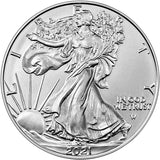
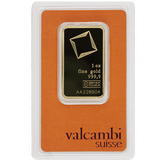
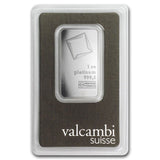
For clients buying gold coins or bullion through Alex Lexington, a one-ounce Gold American Eagle at today's $4,761 spot price, plus typical dealer premiums of $120–$180 per coin, puts the all-in cost at approximately $4,881–$4,941. That is roughly $90–$95 less per coin than at the April 8 peak. Not a dramatic discount, but a meaningful one for buyers who are disciplined about entry points.
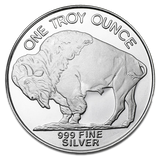
For silver stackers, $75.80/oz spot with typical premiums on generic silver rounds of $3–$5/oz produces an all-in cost near $79–$81 per ounce. Perth Mint's report of "unprecedented bullion demand" and early queue closures is worth taking seriously: when physical supply tightens globally, dealer premiums widen — sometimes quickly and without warning. Buyers who wait for a slightly lower spot price can end up paying more in total when the premium adjusts.
The structural case for owning physical metals has not changed. The PBOC's 17 consecutive months of reserve additions, mine production constraints that are structural rather than cyclical, and $8.1 billion in Eastern ETF inflows year-to-date do not reverse because of a single session's geopolitical news cycle. What changes is the entry price available to disciplined buyers.
ACCUMULATE GRADUALLY means exactly that — not all at once, and not waiting indefinitely. The framework at Alex Lexington has always been: buy in measured intervals, let the dollar-cost averaging work across volatility cycles, and hold physical metal you can touch. In our four decades in this business, the structural drivers of this cycle — central bank reserve diversification, sustained Eastern ETF inflows, constrained mine supply — are among the most durable we have observed. That is an observation, not a prediction of price. All markets carry risk.
What to watch this week: The FOMC meets April 29–30. The BOJ meets April 27–28, with Japan Times calling the rate decision "a close call." A BOJ hike would strengthen the yen and create a mild headwind for gold in JPY terms. More immediately, watch Wednesday's Asian session: if gold holds above $4,740 overnight and does not retest $4,658, the relief rally is building structural support. If the overnight session gaps lower again on any negative Hormuz headline, $4,658 becomes the critical test and a break below it opens the door to $4,600. Neither scenario changes the long-term physical accumulation thesis — but both affect optimal entry timing for near-term buyers.
---
DISCLOSURE
This content reflects disclosed trading activity and market analysis for educational purposes. Alex Lexington does not manage client funds or provide personalized financial advice. Past performance does not guarantee future results. Always consult a licensed financial advisor before making investment decisions.---