


Gold
—










How to Invest in Gold: A Comprehensive Guide by Alex Lexington
Updated August 2026 — This guide covers everything you need to know about investing in physical gold: why investors buy it, what products to consider, how pricing works, and exactly how to buy from a trusted dealer. Whether you're purchasing your first gold coin or adding to a six-figure position, this is the resource we wish existed when we started.
Why Invest in Physical Gold?
Gold has served as a store of value for over 5,000 years. Unlike paper currencies, stocks, or bonds, physical gold cannot be printed, diluted, or defaulted on. It exists outside the banking system and carries no counterparty risk — meaning its value doesn't depend on any institution's promise to pay.
Here's why investors allocate to gold:
- Inflation protection — Gold has historically preserved purchasing power during periods of rising prices. When the dollar buys less, gold typically buys more. Read: Why Gold Is Considered an Inflation Hedge
- Portfolio diversification — Gold moves independently of stocks and bonds, reducing overall portfolio risk. Most financial advisors suggest allocating 5–15% of a portfolio to precious metals. Read: How Much Gold Should You Own?
- Safe haven in crisis — During recessions, geopolitical conflicts, banking failures, and market panics, investors consistently move capital into gold. Read: What Makes Gold a Safe Haven Asset?
- Currency hedge — When central banks expand the money supply through quantitative easing or when the Federal Reserve cuts interest rates, gold tends to benefit
- Generational wealth transfer — Physical gold can be passed down without intermediaries, paperwork, or institutional involvement
- No counterparty risk — You own the metal. Not a promise. Not a share. Not a derivative. The metal itself.
Gold Coins vs. Gold Bars vs. Gold Rounds — What's the Difference?
Physical gold comes in three main forms. Each serves a different purpose in an investor's portfolio. Read our full breakdown of bullion types →
Gold Coins (Sovereign Mint)
Government-issued coins like the American Gold Eagle, Canadian Gold Maple Leaf, South African Krugerrand, Austrian Philharmonic, and British Britannia. These carry a face value, are legal tender in their country of origin, and are recognized worldwide.
Best for: First-time buyers, IRA-eligible holdings, maximum liquidity and recognizability
Popular choices at Alex Lexington — all priced live off spot:
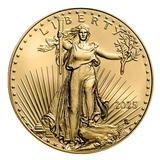
- American Gold Eagle — The most widely traded gold coin in the United States. 22-karat (.9167 fine) with 1 full troy ounce of pure gold. Also available in 1/2 oz, 1/4 oz, and 1/10 oz
- American Gold Buffalo — .9999 fine (24-karat) pure gold. The first pure gold coin produced by the U.S. Mint
- Canadian Gold Maple Leaf — .9999 fine with advanced anti-counterfeiting features (DNA mark, radial lines). One of the purest gold coins available; also stocked in 1/10 oz
- South African Krugerrand — The original modern gold bullion coin (1967). 22-karat with a distinctive copper alloy that gives it a warm tone
- Austrian Gold Philharmonic — Europe's most popular gold coin. .9999 fine, denominated in Euros
- British Gold Britannia — .9999 fine (since 2013). Issued by the Royal Mint with capital gains tax advantages for UK investors. Stock moves quickly — check current availability
Browse every gold coin we carry →
Gold Bars (Private Mint)
Produced by LBMA-approved refineries like PAMP Suisse, Valcambi, Argor-Heraeus, Perth Mint, and the Royal Canadian Mint. Bars carry lower premiums than coins because production costs are lower — no intricate designs, no government mint fees. Browse gold bars →
Best for: Maximizing gold per dollar, larger investments ($5K+), investors prioritizing weight over collectibility
Popular sizes:
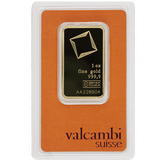
- 1 oz gold bars — Most popular bar size. PAMP Fortuna, Valcambi, Perth Mint, Argor-Heraeus Kinebar, Royal Canadian Mint
- 10 oz gold bars — Significant position. Lower per-ounce premium
- 1 kilo gold bars (32.15 oz) — Institutional size. Lowest premium per ounce
- Gram bars — Accessible entry points and gift-friendly sizes: 1 gram, 10 gram, 50 gram Valcambi CombiBar, and 100 gram
Gold Rounds (Private Mint)
Round-shaped gold pieces produced by private mints. They look like coins but carry no face value and are not legal tender. Premiums fall between coins and bars.
Best for: Investors who want coin-like form factor at closer-to-bar pricing
Fractional Gold
Coins and bars smaller than 1 troy ounce — including 1/2 oz, 1/4 oz, and 1/10 oz coins, plus gram-weight bars from 1 gram up. Fractional gold carries higher per-ounce premiums but offers flexibility, divisibility, and a lower dollar entry point. A Valcambi CombiBar — one ounce that breaks into ten 1/10 oz pieces — splits the difference.
Best for: New investors, buying on a schedule, gifts, smaller budgets
Understanding Gold Pricing
What Is the Spot Price?
The spot price is the current market price for one troy ounce of pure gold, determined by global commodity exchanges (COMEX, LBMA) and updated continuously during trading hours. Every gold transaction worldwide references the spot price as its starting point.
What Is a Premium?
The premium is the amount above spot price that you pay for a physical gold product. It covers mining, refining, minting, distribution, and dealer margin. Premiums vary by product type:
| Product Type | Typical Premium Over Spot |
|---|---|
| 1 oz Gold Bar (generic) | 2–4% |
| 1 oz Gold Coin (Eagle, Maple) | 3–5% |
| Fractional Gold (1/10 oz) | 6–10% |
| Kilo Bar | 1–3% |
At Alex Lexington, our gold margins run 3–3.5% on standard 1 oz products — among the lowest in the Southeast. Every product page shows the live spot price and the premium separately, so what you see on the screen is what you pay.
What Is the Bid-Ask Spread?
The bid-ask spread is the difference between what a dealer will pay you for gold (bid) and what they'll sell it to you for (ask). A tighter spread means more competitive pricing. Our spreads are among the narrowest in the industry because we price off wholesale, not retail.
Understanding Gold Purity
Gold purity is expressed in karats or fineness:
- 24 karat (.999 or .9999 fine) — Pure gold. Maple Leafs, Buffalos, most bars
- 22 karat (.9167 fine) — 91.67% gold. American Eagles, Krugerrands. Still contains 1 full troy ounce of pure gold — the alloy adds durability
- 21.6 karat (.900 fine) — Pre-1933 U.S. gold coins
How to Buy Gold — Step by Step
Step 1: Decide What to Buy
Consider your goals:
- Maximum gold per dollar? → 1 oz bars or kilo bars
- Maximum liquidity and recognizability? → American Eagles or Canadian Maple Leafs
- IRA-eligible? → Eagles, Buffalos, Maple Leafs, and bars meeting minimum purity (.995 gold). Read: Gold IRA Explained
- Starting small? → Fractional coins or 1-gram bars
- Building a position over time? → Our Monthly Purchase Service buys a set amount every week, fortnight, or month at live pricing — logged, stored, and cancellable whenever you like. Not sure what a budget buys? Try the budget calculator, or read the strategy behind dollar-cost averaging
Step 2: Choose Your Dealer
Not all gold dealers are created equal. Look for:
- Track record — How long have they been in business? (Alex Lexington's family roots go back to 1977 in New York's Diamond District)
- Transparent pricing — Can you see the spot price and the premium separately?
- Credentials — BBB accreditation, industry registrations, Google reviews
- In-house authentication — Does the dealer have XRF spectrometry or rely on visual inspection?
- Buyback policy — Will they buy it back when you're ready to sell? Read ours
Step 3: Choose Your Payment Method
Payment method affects both cost and speed:
- Wire transfer — No processing fee. Best for orders over $5,000. Read: How Wire Transfers Work for Bullion
- ACH bank transfer — No processing fee. 3–5 day clearing period
- Credit/debit card — Instant, but a 3.5% processing fee applies. Best for smaller orders
- Cash — Immediate. Transactions over $10,000 require ID per federal regulations
- 10% deposit + wire — Lock today's price with a 10% card deposit, wire the remaining 90% within 48 hours. Ideal for large orders where price protection matters
Step 4: Take Delivery — or Don't
You have three options:
- Walk out same day — In-stock items available for immediate pickup at our Chamblee location
- Insured shipping — Fully insured, signature-required delivery to your door
- Leave it in the vault — Segregated, fully insured storage at our own Chamblee facility. Never commingled, never lent, and withdrawable the same day. How SECURE storage works → · See the rate card →
Selling Gold — How Buyback Works
A good dealer is also a good buyer. At Alex Lexington, we buy back gold at competitive prices based on the current spot rate. Here's how it works:
- Bring your metals in — Visit our Chamblee location with your coins, bars, or jewelry
- We authenticate — In-house XRF spectrometry testing confirms purity and weight
- We quote — Price based on current spot rate minus a fair spread
- You get paid — Same-day payment by check, wire, or ACH
Want a number before you drive over? Get a live buyback estimate → · Learn more about selling gold to Alex Lexington →
Gold as Part of a Broader Precious Metals Strategy
Most serious investors don't just buy gold — they diversify across metals:
- Gold — The anchor. Wealth preservation, inflation hedge, safe haven
- Silver — Lower entry point, higher volatility, significant industrial demand. Watch the gold-to-silver ratio for relative value signals
- Platinum — 30x rarer than gold with strong automotive demand
- Palladium — Critical industrial metal (catalytic converters, electronics, hydrogen fuel cells)
Read: Portfolio Diversification with Precious Metals →
Common Mistakes to Avoid
- Paying too much premium — Compare dealer margins. If someone is charging 8–10% over spot for standard bullion, you're overpaying
- Buying from unverified sources — Online marketplaces, Craigslist, and flea markets carry significant counterfeit risk. Buy from established, BBB-accredited dealers with in-house authentication
- Trying to time the market — Nobody consistently calls the top or bottom. Buying a set amount on a fixed schedule removes timing anxiety; here is why it works
- Ignoring liquidity — Obscure coins and exotic bars can be hard to sell. Stick to globally recognized products (Eagles, Maples, Krugerrands, PAMP bars) for maximum resale flexibility
- Confusing numismatic value with bullion value — Collectible coins carry subjective premiums. If your goal is gold exposure, buy bullion-grade products priced close to spot
- Not having a buyback plan — Before you buy, know where you'll sell. A dealer who buys back at competitive spreads (like Alex Lexington) protects your exit
Frequently Asked Questions
What is the minimum amount I need to invest in gold?
There is no minimum. A 1-gram gold bar costs around $100–$200 depending on spot price, and a 1/10 oz American Gold Eagle runs a few hundred dollars. You can start at whatever level is comfortable and build from there.
Is gold taxed in Georgia?
Georgia exempts investment-grade precious metals from sales tax on transactions exceeding $1,500. Below that threshold, sales tax may apply. There is no state capital gains tax in Georgia.
How do I know the gold is real?
Every product we sell is sourced through established wholesale supply and comes with mint-issued authentication. For items brought to us for sale, we verify authenticity using in-house XRF spectrometry — the same technology used by government mints and refineries.
Should I buy gold ETFs or physical gold?
Gold ETFs (like GLD or IAU) offer market exposure without holding metal. Physical gold offers true ownership with no counterparty risk. Many investors hold both — ETFs for trading and rebalancing, physical gold for long-term wealth preservation. Physical gold is also not subject to exchange closures, broker insolvency, or fund manager decisions. Read the full comparison →
What is the best gold coin for investment?
The American Gold Eagle is the most popular investment coin in the United States due to its universal recognition, IRA eligibility, and strong buyback market. The Canadian Gold Maple Leaf (.9999 fine) is preferred by investors prioritizing purity. Both are excellent choices.
Can I buy gold for my IRA?
Yes. A self-directed precious metals IRA allows you to hold physical gold in a tax-advantaged retirement account. Eligible products include American Eagles, American Buffalos, Canadian Maple Leafs, and bars meeting minimum fineness requirements (.995 for gold). Read our full Gold IRA guide →
Do I have to take the metal home?
No. You can leave it with us in segregated, fully insured vault storage at our Chamblee facility — never commingled, never lent, and available for same-day withdrawal. See how SECURE storage works →
Ready to Get Started?
Visit us: 3335 Chamblee Dunwoody Rd, Chamblee, GA 30341
Call: 404.815.8893
Hours: Monday – Friday, 10:00 AM – 4:00 PM
Shop live inventory: Gold Coins → | Gold Bars → | All Metals →
Or let us do the work: Buy on a schedule → | See what your budget buys → | Store it in our vault →
Disclosure: This article is published by Alex Lexington for educational purposes only. It is not investment advice, tax advice, or a recommendation to buy or sell any security or commodity. Precious metals carry risk, including the potential loss of principal. Past performance does not guarantee future results. Consult a qualified financial advisor before making investment decisions. Alex Lexington is a precious metals dealer, not a registered investment advisor.
Continue Learning
Explore more from the Alex Lexington Network — our education and media platform. Follow us on Instagram, YouTube, TikTok, and Spotify.
- What Is the Spot Price of Gold?
- Understanding Gold Premiums
- What Is Bullion? Bars, Coins, and Rounds Explained
- Dollar-Cost Averaging Into Gold and Silver
- Karat vs. Fineness: Understanding Gold Purity
- What Is Liquidity and Why Does It Matter?
- Wire Transfers for Precious Metals
- Gold IRA Explained
- What Makes Gold a Safe Haven Asset?
- Precious Metals Glossary — Full A–Z Reference
- Frequently Asked Questions
Read more
Emerging Trends in Precious Metals: Investment Strategies for 2025
• Market Outlook for 2025: Analyze recent forecasts indicating that gold prices are expected to continue their upward trajectory, with projections ranging between $2,450 and $2,950 per ounce.Reuter...
Read more
A Glimpse into the JCK Day 1 Experience : Exploring Jewelry Innovations
Education at its Finest for the Alex Lexington Network Introduction and Guest Introduction As we embark on the journey of jewelry exploration, I had an enriching conversation with Danielle Dawkins...
Read more