


Gold
—









What Is Liquidity and Why Does It Matter for Gold Investors?
CHAMBLEE, GA · PRECIOUS METALS EDUCATION
ALEX LEXINGTON
THE DAILY MARKET INTELLIGENCE EDITION
WHAT IT MEANS
Liquidity is the measure of how quickly and easily an asset can be converted to cash without significantly affecting its price. A highly liquid asset can be sold almost immediately at a price close to its current market value. An illiquid asset takes time to sell and often requires accepting a discount.
Cash is the most liquid asset by definition. But among investment assets, gold ranks near the top. Physical gold can be sold on any business day through any dealer, at a price directly tied to the globally recognized spot price. There is always a buyer for gold because there is always global demand — from central banks, institutional investors, jewelry manufacturers, and retail buyers worldwide.
WHY IT MATTERS FOR INVESTORS
Liquidity determines your ability to access the value of your investments when you need it. An investment that cannot be readily converted to cash at a fair price is not truly "worth" its quoted value in practical terms.
Consider the spectrum. Public stocks are highly liquid — you can sell shares on an exchange in seconds. Real estate is highly illiquid — selling a house takes weeks to months, involves transaction costs of 5-6%, and the price depends on finding a willing buyer. Private equity, collectibles, and most alternative investments fall somewhere in between.
Gold occupies a unique position. It is a physical, tangible asset — like real estate — but it trades with the liquidity of a financial instrument. This is because gold has a universal, transparent pricing mechanism (the spot price, set by global futures markets and the London Fix), a global network of dealers and exchanges, and no specialized knowledge required to evaluate it (unlike art, wine, or vintage cars where valuation is subjective).
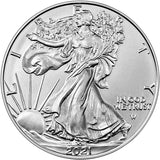
A 1 oz American Gold Eagle can be sold to virtually any dealer in the world on any business day. The price will be spot minus a small dealer spread — typically 1-3% below spot for common bullion products. There is no appraisal, no negotiation over subjective value, and no waiting period. You walk in with gold, you walk out with cash.
HOW IT CONNECTS TO PRECIOUS METALS
Liquidity varies within the precious metals market based on product type and metal.
Gold is the most liquid precious metal. Standard bullion products from sovereign mints — Eagles, Maple Leafs, Krugerrands, Britannias — trade closest to spot with the tightest spreads. Generic bars and rounds are slightly less liquid because buyers may scrutinize the brand or assayer. Numismatic (collector) coins are the least liquid gold products because their value depends on rarity and condition, which are subjective.
Silver is liquid but with wider spreads. Because silver's per-ounce value is lower, the percentage cost of handling and transaction is higher. Dealer buy-back spreads on silver typically run 5-10% below spot versus 1-3% for gold.
Platinum and palladium are less liquid than gold or silver. Fewer dealers maintain active inventories, and the market is thinner — meaning large sales can move the price more significantly.
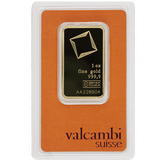
For investors prioritizing liquidity, the optimal products are 1 oz gold coins from major sovereign mints, followed by 1 oz gold bars from LBMA-accredited refiners. These products trade globally with minimal friction.
The practical implication: if you might need to access the value of your metals on short notice, structure your holdings toward the most liquid products. If your time horizon is long and you are optimizing for lowest premium per ounce, you can accept slightly less liquid products (larger bars, generic rounds) that carry lower premiums at purchase.
THE BOTTOM LINE
Gold's combination of tangibility and liquidity is rare. It is a physical asset you can hold in your hand, stored in a vault with your name on it, that can be converted to cash at a globally transparent price on any business day. Few other physical assets offer this combination.
At Alex Lexington, buyback pricing is always transparent and based on the live spot price. When you are ready to sell, the process is straightforward — no appraisals, no waiting periods, and no hidden fees.
WHERE THIS APPLIES
Liquidity cuts both ways: we quote a two-way market. Check the buyback calculator for what your metal fetches today, or see gold in the case today to buy.
RELATED TERMS
Spot Price | Bid/Ask Spread | Safe Haven Asset | Bullion | Troy Ounce
DISCLOSURE
Alex Lexington provides this content for educational purposes only. This is not investment advice. Precious metals prices fluctuate and past performance does not guarantee future results. Consult a qualified financial advisor before making investment decisions. Alex Lexington is a licensed precious metals dealer, not a registered investment advisor.