


Gold
—









%0A$4,207.30/oz%20(up%20$52.70...)
Silver and Gold Snap Back as Iran Ceasefire Takes Hold — But the Buy Window That Matters Most Is Structural
TUESDAY, JUNE 23, 2026 · ATLANTA, GA
ALEX LEXINGTON
THE DAILY MARKET INTELLIGENCE EDITION
---
MARKET SNAPSHOT
| Gold Spot (XAU/USD) | $4,207.30/oz (up $52.70, +1.27% from prior close — snapping a three-consecutive-session losing streak; recovering from Friday's three-week low near $4,150) |
| Silver Spot (XAG/USD) | $66.19/oz (up $1.48, +2.28% from prior close — outpacing gold on the recovery session; ratio beginning to compress from the prior week's expansion) |
| Gold/Silver Ratio | 63.3:1 — widened from 61.7:1 on June 15 during last week's selloff; silver underperformed gold on the way down, now outperforming on the way back up |
| Brent Crude | $78.41/bbl (down -2.1% from prior close — Strait of Hormuz reopening framework removing the conflict-era supply premium; Goldman cut Q4 Brent target to $80 from $90) |
| DXY (US Dollar Index) | 100.82 — sitting inside the 100.26–101.14 key resistance band after the hawkish June 17 FOMC; a confirmed break above 101.14 would mechanically pressure gold via real-yield arithmetic |
| 10-Year Treasury Yield | 4.49% (up +0.03 percentage points from prior session — hawkish dot plot continues to be priced in the curve; extension above 4.55% would be a meaningful additional headwind) |
| S&P 500 (SPY) | $746.93 (intraday range $743.35–$748.24; equity markets constructive on Iran ceasefire framework, no fresh Fed-speak escalation) |
| VIX | ~16.78–17.04 — well below the 20 stress threshold; market has absorbed the Fed hawkish surprise from June 17 without panicking |
Three sessions tell the story of Monday's recovery. The Asian session opened at $4,186.30 at 05:15 GMT with the Shanghai Gold Exchange returning from the Dragon Boat Festival holiday — an SGE premium of +3.5–4.0% to COMEX confirming that Chinese physical buyers had continued absorbing during the exchange's three-day closure. London confirmed the Asian bid at $4,210.04 by 08:25 ET. US COMEX opened and held the range at $4,203.70–$4,207.30 by 08:31 ET. All three sessions aligned bullish Monday — a clean directional reversal from the all-three-sessions-bearish alignment that had defined the prior week's selloff.
---
MARKET CONTEXT
The three-session losing streak that carried gold from above $4,300 to a three-week low near $4,150 by Friday June 19 had a single author: the Federal Reserve. On June 17, Fed Chair Warsh delivered a dot plot in which 9 of 18 FOMC members projected at least one additional 2026 rate hike. Forward guidance was stripped from 341 words to 130. Markets repriced September hike probability to approximately 70%. Goldman Sachs cut its year-end gold forecast from $5,400 to $4,900 the same week. The dollar moved toward a one-year high.
Monday's recovery had a different author: the Iran-US ceasefire framework signed June 17, with the Strait of Hormuz reopening commitment beginning to take hold. When Brent crude falls 2.1% in a single session, two things happen simultaneously for precious metals. First, lower oil reduces inflation expectations and the case for additional Fed tightening — that is rate-channel bullish for gold. Second, lower oil removes the geopolitical safe-haven premium that had been adding to the gold bid. Those two forces work in opposite directions, which is exactly why Monday's tape produced a constructive but measured +1.27% recovery rather than a sharp reversal. The market is navigating a genuine tug-of-war, and the price is telling the truth about that tension.
The international read Monday was led by China. The Shanghai Gold Exchange returned from the Dragon Boat Festival with elevated premiums — physical buyers in China did not wait for the exchange to reopen before deciding how much they wanted to own at $4,150. They signaled that intent through the premium level. That premium structure, combined with Q1 2026 Chinese net gold imports of 317 tonnes (up nearly three times quarter-over-quarter per Bloomberg), is the cleanest evidence that the Asian physical bid continues to operate as a price floor regardless of what the FOMC dots say.
The most important institutional data point this week comes from the ECB's June 2026 international role of the euro report: gold now represents 27% of global central bank reserves, up from 20% one year prior — overtaking US Treasuries, which stand at 22%. This is not a forecast. It is a backward-looking documented measure from one of the world's most closely watched financial institutions, confirming that the structural reserve-asset rotation into gold has already happened at the sovereign level. World Gold Council Q1 2026 central bank demand data corroborates: 244 tonnes added in Q1, above the prior quarter and the five-year average. Poland added 31 tonnes to reach 582 tonnes total. The People's Bank of China added to reserves for the 19th consecutive month, reaching 74.96 million troy ounces — 2,331.52 tonnes, approximately 9% of total FX reserves.
On June 22, the Dubai Gold and Commodities Exchange launched a T+0 same-day spot gold contract — the first such instrument in the region, targeting refineries, dealers, and clearing banks seeking faster execution during volatile periods. UAE foreign trade in precious metals reached AED 625 billion in 2024, up 27% year-over-year. This is physical market infrastructure being deepened outside the traditional LBMA/COMEX axis, positioned for a multi-year regime in which gold flows operate increasingly across non-Western settlement systems.
H1 2026 global gold ETF inflows reached $38 billion — the strongest semi-annual performance since H1 2020, per the World Gold Council. Total ETF assets under management rose 41% year-to-date to $383 billion. Holdings increased by 397 tonnes to 3,616 tonnes total. GLD weekly inflows ran approximately $1.3 billion. This is institutional money voting with size.
Silver's industrial picture adds its own layer. The Silver Institute projects the sixth consecutive year of global silver supply deficit in 2026 — a shortfall of 46.3 million ounces against a cumulative 2019–2025 deficit of 762 million ounces. AI data centers, electric vehicles, and automotive electronics are absorbing what solar pulled back. CFTC data from June 9 showed silver non-commercial net long positioning at approximately 22,214 contracts, less crowded than gold's speculative positioning and leaving more room to absorb fresh institutional inflows. Silver at $66.19 Monday outpaced gold's recovery, and the 63.3:1 ratio — widened from 61.7:1 during last week's underperformance — began compressing back toward more neutral territory. At 63.3:1, silver is neither historically cheap (above 80) nor expensive (below 60) against gold. It sits in the middle of the range, with structural supply discipline running underneath.
---
MAVERICK TRADING JOURNAL
Today's call: NO CALL — INSUFFICIENT SIGNAL.
Three rules combined to produce no tactical entry today.
First, sentiment reads 5/10 NEUTRAL with medium confidence — a genuine composite of opposing forces. The hawkish Fed dot plot and DXY near a one-year high on one side. PBOC 19-month consecutive buying and ECB-confirmed reserve rotation on the other. Iran ceasefire simultaneously removing the geopolitical premium (bearish near-term for gold's safe-haven component) and reducing inflation expectations (rate-channel bullish). When the inputs are internally contradictory to this degree, the sentiment read is not directional, and forcing a call against it would be confidence without basis.
Second, no fresh Layer 1 trigger fired on either metal. Gold's +1.27% recovery sits inside the 0.5–1.5% normal swing range — below the 2–3.5% mean-reversion signal threshold. Silver's +2.28% sits well below the 4–6% silver threshold. Today's snapback is the recovery half of last week's completed selloff, not a fresh trigger. The framework distinguishes between the two because they call for different responses.
Third, the SLV BUY opened March 31 at $64.03 remains open. The ETF sits at approximately $59.81 (June 18 close), approximately -6.6% unrealized against the entry. The underlying silver spot at $66.19 reflects approximately +3.4% improvement on the metal itself — a tracking divergence that has persisted across multiple months. No fresh silver entry is permitted while that position is open. Andre's close decision remains live.
The June 2026 closed trade record stands at one winner: the June 8–9 GOLD spot long, entered at $4,330 and closed at $4,463.82, for a +3.09% gain. Cumulative closed record: 1 win, 3 losses, 25% win rate, with the SLV open position pending.
The constructive signal from Monday's session is the three-session-aligned bullish confirmation across Asia, London, and New York. That is meaningful when it persists. One day of three-session alignment after three days of opposite alignment is the expected turning-point behavior — not yet a trend breakout. If Tuesday and Wednesday also close higher across all three sessions, the framework shifts toward trend-respect mode, pausing mean-reversion short signals. Watch Tuesday's Asian open for whether the SGE premium holds and London confirms again.
The setup that re-engages a tactical call: gold extending another 2–3.5% from today's level in either direction, or silver extending another 4–6%, or a confirmed break above DXY 101.14 that mechanically pressures gold via real-yield arithmetic.
---
THE TAKEAWAY
The physical buy window is the widest it has been in June.
Gold at $4,207.30 sits approximately 24.7% below the January all-time high of $5,589. Friday's three-week low near $4,150 marked the deepest pullback of the June cycle. Monday's partial recovery has retraced only a small fraction of what the three-session selloff took away. For anyone who spent April and May watching gold hold near all-time highs and waiting for a meaningful entry point, June delivered one. The next two weeks will determine whether the window deepens further or begins to close, and two variables will answer that: Iran ceasefire execution (slippage re-bids the safe-haven channel; clean execution gradually removes the geopolitical premium), and Fed-speak (any reinforcement of the hawkish dot plot extends DXY pressure; any softening reduces it).
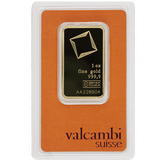
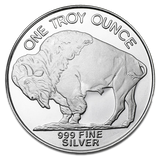
For physical silver, the discount is even more pronounced. Silver at $66.19 sits approximately 46% below the January 29 all-time high of $121.62. American Silver Eagles with typical dealer premiums land all-in at approximately $71–$73 per ounce. Generic rounds and bars, $69–$71 per ounce. Ninety-percent junk silver bags carry the lowest premium per troy ounce in the product line. After last week's selloff and with the structural supply deficit in its sixth consecutive year, the physical entry is as constructive as it has been since early in the year.
We have been in this business since 1977. Through enough Fed cycles, geopolitical events, and commodity swings to know that the structural floor signals carry more weight than any single week of tape. The ECB's confirmation that gold has overtaken US Treasuries as a share of global central bank reserves is not commentary. It is a documented fact from Europe's central banking authority. Central banks do not accumulate an asset for 19 consecutive months and then reverse on a single dot plot. The time horizons are different by design.
DCA customers on scheduled intervals may find that current entry levels — approximately 24.7% below the January high — remain consistent with their stated accumulation thesis. Whether to continue, pause, or adjust is each buyer's own decision. The structural signals that made the long-term case in January are stronger today, not weaker — what changed was the price, not the thesis. Tactical front-loaders: stage entries rather than full deployment, maintaining flexibility for the scenario where Iran slippage or sustained Fed hawkishness extends the window further toward the prior week's $4,150 level. Vault storage customers already positioned hold segregated metal that is exposed to the same structural demand dynamics — ECB-confirmed reserve rotation, 19-month PBOC streak, H1 ETF inflows at $38 billion record, sixth-year silver supply deficit — that operate on a time frame no single FOMC meeting can override.
Gold and silver together, physical and segregated. That has been the thesis since the beginning of the year. It remains the thesis today.
---
DISCLOSURE
This content reflects disclosed trading activity and market analysis for educational purposes. Alex Lexington does not manage client funds or provide personalized financial advice. Past performance does not guarantee future results. Always consult a licensed financial advisor before making investment decisions.
---