


Gold
—





%0A$4,130%E2%80%93$4,216/oz%20(up%20$53...)
Silver Leads, Gold Follows, and Seoul Just Changed the Game
WEDNESDAY, AUGUST 5, 2026 · ATLANTA, GA
ALEX LEXINGTON
THE DAILY MARKET INTELLIGENCE EDITION
MARKET SNAPSHOT
| Gold Spot (XAU/USD) | $4,130–$4,216/oz (up $53–$125, +1.3% to +2.95% from prior close) — third consecutive session of gains; Layer 1 acute band fired on the high-end reference; rallied hard while Brent fell sharply, an emphatic structural tell |
| Silver Spot (XAG/USD) | $61.58–$61.60/oz (up $2.07, +3.49% from prior close) — led gold on the session for the third straight day; approaching but not yet at the 4–6% acute-band threshold |
| Gold/Silver Ratio | 67:1 — compressed from 69.5 yesterday; three-session compression from 70.1 → 67 is the relative-value acceleration of the week; low end of the historically-neutral 60–70 zone, above the 50-year average of ~60 |
| Brent Crude | $80.73–$83.72/bbl (down as much as -6.78% intraday from prior close on Strait of Hormuz deal draft news, partial recovery through session) — sharpest single-day energy move of the week; gold rallied against the oil selloff, confirming the structural bid |
| WTI Crude | $76.01–$76.57/bbl (up +0.32% to +1.06% from prior close) |
| DXY (US Dollar Index) | 99.72–99.85 — below 100 key resistance; dollar softness providing material tactical support to metals |
| 10-Year Treasury Yield | 4.627% (down -1.26% from prior session) — falling yields reduce the opportunity cost of holding gold; meaningful contributor to today's metals bid |
| S&P 500 | 7,737 (record close, up +1.79% from prior close); Nasdaq up +3.32% — tech-led equity gains co-existing with metals rally signals allocation buying, not crisis demand |
| VIX | 16.34–16.59 (down -0.97% to -2.93% from prior session) — below the 20 stress threshold; reduced fear environment consistent with peace-talk-driven risk rotation |
Gold closed at $4,216 on the US-session high-end reference — a third consecutive day above $4,130. The World Gold Council confirmed Q2 2026 central bank demand at 289 tonnes, a quarterly record and +74% year-over-year. The People's Bank of China extended its buying streak to 20 consecutive months through June, adding 14.93 tonnes in June alone — the largest single-month addition since 2023. Silver's 90% junk bags now yield approximately $44.03 per $1 face value at current spot before dealer premium, up roughly $2.37 from Tuesday's reference. GLD ETF recorded $446.8 million in weekly inflows in mid-July; SLV is up approximately 160% over the past 12 months. CFTC Commitments of Traders data from July 28 shows silver open interest at 106,719 contracts with non-commercial net long positioning — 35,314 longs against 13,097 shorts — not extreme crowding. The September 2026 Fed hike probability fell from 67% to 57% on the session as Hormuz deal optimism reduced energy-driven inflation expectations.
---
MARKET CONTEXT
Wednesday opened with a single news event that should have pressured gold: Qatar's Foreign Minister confirmed that a Strait of Hormuz draft agreement was in its final stages, and US Treasury Secretary Scott Bessent told CNBC a deal could arrive "today or tomorrow." Brent crude fell as much as 6.78% intraday in response — the sharpest single-session energy drop of the week.
Gold went the other direction. It closed the US session at $4,216 on the high-end reference, up as much as 2.95%.
That divergence — oil dropping hard, gold rallying hard, simultaneously — is the most important data point of the session. It tells you something specific about what is driving this market. When gold rises because oil rises, that is the inflation-hedge channel at work — and it tends to reverse when oil reverses. That is not what happened today. Gold rose because the dollar is weakening, real yields are declining, and sovereign institutions worldwide are accumulating physical metal at a pace not seen in modern times. The Hormuz deal news compressed the rate-hike premium by reducing energy-driven inflation expectations, which pulled the September FOMC hike probability from 67% to 57% and pushed the 10-year Treasury yield down to 4.627%. Lower yields reduce the opportunity cost of holding gold. That, combined with DXY sitting at 99.72 well below the 100 key resistance level, produced today's rally through a channel entirely separate from crude oil.
Silver's story is structurally different and arguably more compelling. Silver gained 3.49%, leading gold for the third consecutive session and compressing the gold/silver ratio from 69.5 to 67. That three-session compression — from 70.1 on Monday to 67 today — represents a meaningful acceleration in silver's relative-value recovery. The Silver Institute's 2026 supply survey documents a 46.3 million ounce deficit, the sixth consecutive annual shortfall, with cumulative deficits from 2021 through 2026 totaling 762.1 million ounces. Fresnillo, the world's largest primary silver producer, cut its 2026 production guidance by 9%. COMEX, LBMA, and Shanghai silver inventories are declining simultaneously. The S&P 500's record close of 7,737, led by a 3.32% Nasdaq surge, reinforces the industrial demand channel: semiconductor and solar manufacturing's appetite for silver does not move with the quarterly price.
The international read that matters most this week arrived Tuesday evening. The Bank of Korea announced a long-term domestic gold buying program — the first physical gold acquisition by the BoK since 2013. The structure involves negotiated block trades through the Korea Exchange from domestic producer LS MnM, plus purchases of overseas-listed spot gold ETFs. No timing or volume commitments were announced, but the structural signal is precise: a new sovereign name has joined the accumulation register.
The World Gold Council's Q2 2026 central bank demand figure of 289 tonnes — the quarterly record — arrived in a year when, per the ECB's June 2026 report, gold surpassed US Treasuries as the single largest category of global official reserves at approximately 27%. The PBoC's 20-month streak and the BoK's fresh program are chapters in the same story: reserve managers across multiple continents are shifting the composition of official assets toward physical gold at a pace that has no modern precedent. India's MCX Gold futures rallied 0.73% on the session to Rs 145,359 per 10 grams, with the domestic silver contract up 1.13% — the international physical channel tracking in step.
---
MAVERICK TRADING JOURNAL
Today's framework produced NO CALL — MONITORING. The mechanics are worth explaining because they involve something more interesting than simply sitting on the sidelines.
The framework's Layer 1 acute band did fire: gold's +2.95% high-end session reference is inside the 2–3.5% gold acute band. Under Layer 2 of the protocol, a move of that magnitude on the upside normally generates a mean-reversion SHORT signal. Today, that signal was subordinated — and then explicitly overridden — by Layer 3.
Layer 3 of the session-divergence protocol addresses what happens when all three trading sessions — Asian, London, and US — agree on direction for three or more consecutive days. That configuration has a name: all-sessions-agree trend-continuation. The protocol is unambiguous: respect the trend, do not fade it. Monday's overseas session was modestly UP with the US session flat. Tuesday saw overseas softness with the US session as the recovery leg. Wednesday saw the Asian session hold gold above $4,130 for a third consecutive day, London confirmed the rally, and the US session closed gold at $4,216 alongside record equity markets and a simultaneous silver acceleration of 3.49%. The three-session oscillation pattern broke into a directional trend. The framework's Layer 3 does not generate a short-side call against that configuration.
Two open positions also bind against fresh derivative entries under Rule 6. The GLD CALL opened June 26 at $366 reached its documented target at the July 30 close when GLD printed $377.12. The current Sentinel reference — $371.62–$371.71, the Aug 3–4 close — sits below the target line, though today's gold spot rally of +2.95% likely lifted the ETF's Aug 5 close above that reference when captured. Per framework rules, the close decision belongs to Andre. The SLV BUY opened March 31 at $64.03 sits at approximately -18.07% unrealized on the Aug 4 close reference of $52.46, though silver spot's +3.49% session provided meaningful cushion on the underlying today. Rule 6 binds against fresh silver derivative exposure while both positions remain open.
NFP Friday August 7 at 8:30 AM ET is 48 hours away. The soft-caution window is tightening toward the hard-bind that engages at Thursday's close. ADP Private Payrolls for July were released at 8:15 AM ET this morning — the result was not captured by Sentinel before the brief was written. JOLTS came in soft Tuesday at 7.36 million openings, down 178,000 from May's revised figure. The direction of the week's labor data will either confirm or complicate the September FOMC hike probability that compressed to 57% today. Deutsche Bank's precious metals strategist Hsueh Michael maintains a $4,600 Q4 target and has stated publicly that "the explosive rally phase that began August 2024 is not yet over."
The hardest discipline in trading is knowing when not to act. Today is that day.
---
THE TAKEAWAY
The physical buy window today sits at ACCUMULATE GRADUALLY, with the specific observation that the session's acute rally magnitude places it at the boundary where further single-session extension shifts the framework's read toward a WAIT posture.
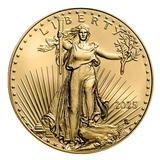
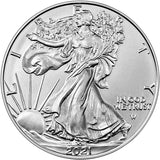
Gold spot at $4,130–$4,216 puts 1-ounce American Gold Eagles, Canadian Maple Leafs, Krugerrands, and Austrian Philharmonics at approximately $4,250–$4,396 all-in depending on the coin and premium structure — roughly $76 to $162 higher per coin than Tuesday's reference range. That is where prices sit today. Silver Eagles at current spot run approximately $66.58–$68.60 all-in; 90% junk silver bags yield approximately $44.03 per $1 face value before dealer premium, up about $2.37 from Tuesday on today's silver rally.
Gold has rallied approximately 4.0% from Tuesday's close on the high-end reference. Silver has rallied approximately 5.7% from Tuesday. Those are acute multi-day moves in a market that just added the Bank of Korea to a sovereign accumulation register that already includes the PBoC, the Reserve Bank of India, and multiple central banks tracked by the World Gold Council's quarterly record. Whether a given purchase interval is consistent with today's price level is a decision that belongs to the buyer and their specific circumstances. The framework notes that any post-NFP pullback would re-open a fresh accumulation signal on the long side; a soft jobs print on Friday would likely extend today's rally toward $4,250 and potentially further.
Alex Lexington has been in Atlanta's Diamond District since 1977. We have watched sovereign accumulation cycles, supply deficit cycles, and dollar-softness cycles from the beginning. If you want to talk through what today's session means in the context of physical metals ownership — coins, bars, or vault storage — we are available for that conversation. The decision of whether and when to buy stays with you. We bring 49 years of context to the conversation.
---
DISCLOSURE
This content reflects disclosed trading activity and market analysis for educational purposes. Alex Lexington does not manage client funds or provide personalized financial advice. Past performance does not guarantee future results. Always consult a licensed financial advisor before making investment decisions.---