


Gold
—







Article: Week in Metals: Gold's Best Week in Two Months, Despite a Hot Jobs Report

Week in Metals: Gold's Best Week in Two Months, Despite a Hot Jobs Report
FRIDAY, NOVEMBER 6, 2026 · ATLANTA, GA
ALEX LEXINGTON
THE PULSE · WEEK IN METALS
The Pulse · Listen now · 6:38
Week in Metals, November 6: Gold's Best Week in Two Months, Despite a Hot Jobs Report
Also on Spotify · All episodes
MARKET SNAPSHOT
| Gold (spot) | About $4,060/oz · down roughly 0.5–1% Friday · up about 4% for the week, its best week in more than two months |
| Silver (spot) | About $52/oz · little changed Friday · up more than 6% for the week |
| October payrolls | +165,000 (about 65,000 expected) · Aug and Sep revised up a combined 84,000 |
| Unemployment rate | 4.1% |
| Average hourly earnings | +0.4% in October · +3.1% over 12 months |
| 10-year Treasury yield | About 4.85% |
| US Dollar Index | About 102.3 · up nearly 0.8% Friday |
| Brent / WTI crude | $98.32 / $90.83 per barrel · front-month oil down about 13% for the week |
| S&P 500 | 7,376.86 · +0.3% Friday · −2.7% for the week |
| Gas (AAA, regular) | $4.07/gal · $3.08 a year ago |
THE METALS
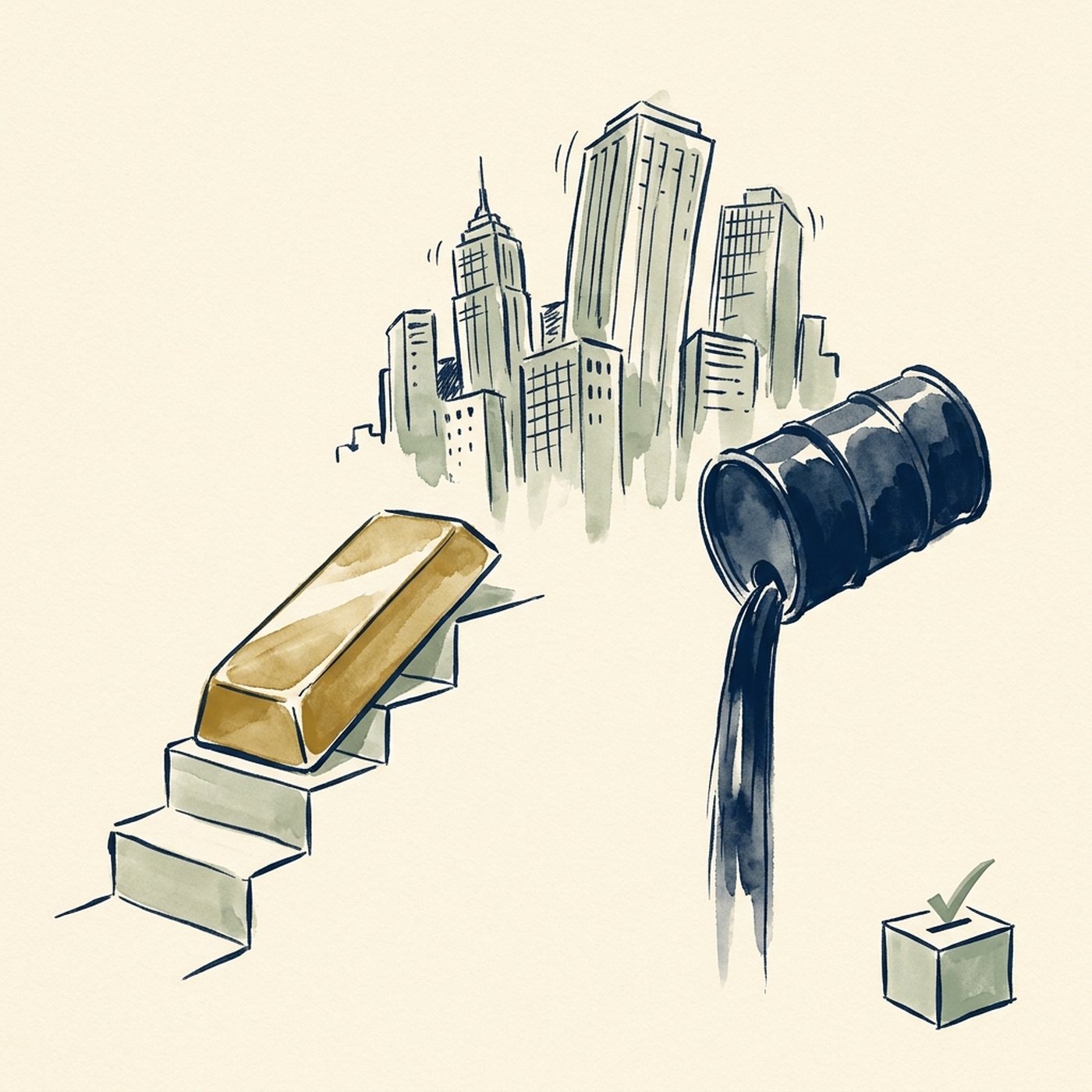
Gold had its best week in more than two months. It finished Friday around $4,060 an ounce, up about 4% for the week, even after slipping a little on Friday. Just a week earlier, on October 30, gold touched its lowest price in a year. Silver did even better, ending near $52 an ounce, up more than 6% for the week.
THE STORY
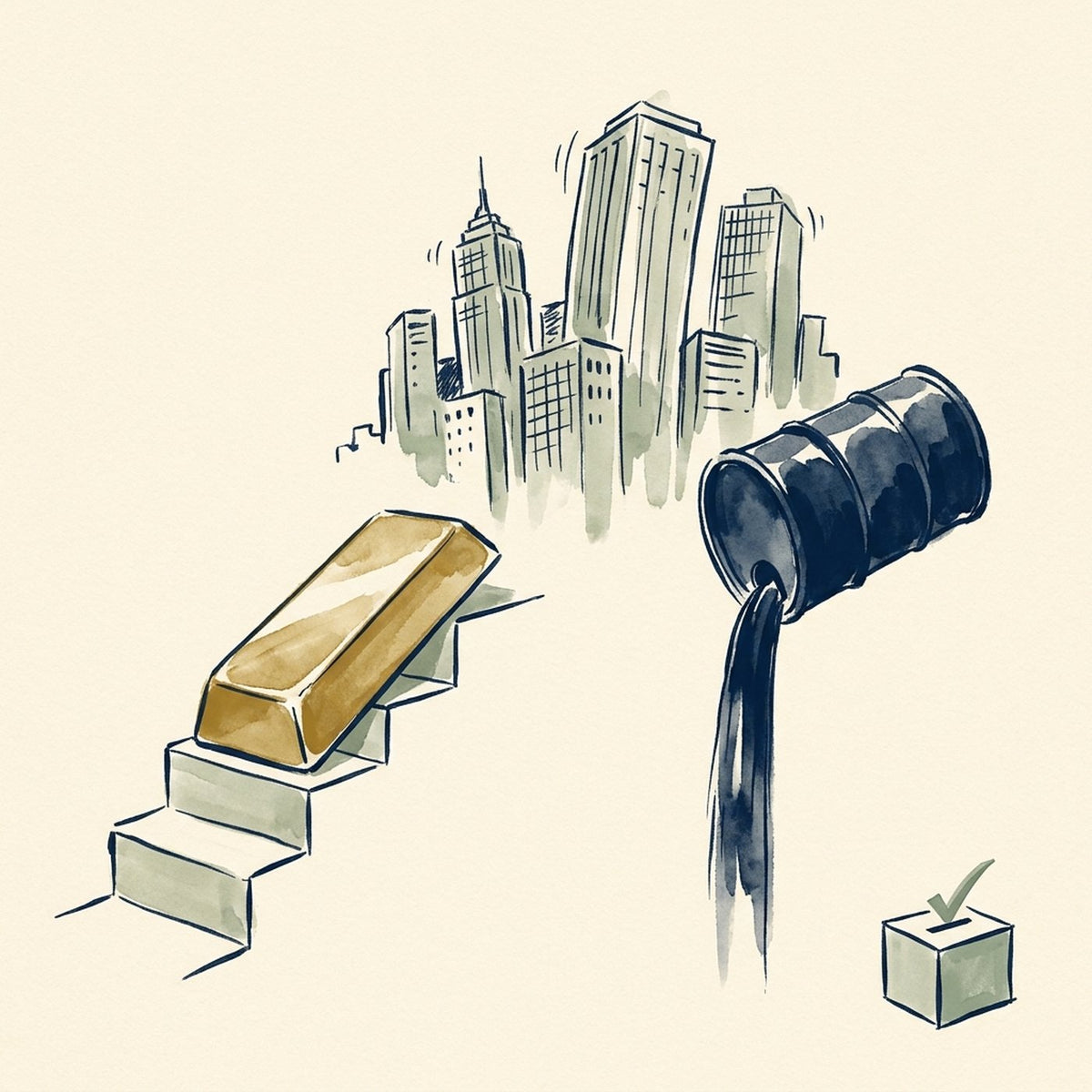
The midterms and oil. Tuesday's elections handed Democrats strong gains, and markets read that as a sign the war with Iran could wind down sooner. Oil fell hard: Brent settled Friday at $98.32 a barrel and US crude at $90.83, with front-month futures down about 13% for the week, the largest weekly drop since 2022. Cheaper oil helped gold because oil feeds inflation, and inflation is what has been pushing the Federal Reserve toward raising rates. Higher rates make gold, which pays no interest, less attractive to hold.
A rough week for stocks. Thursday's selloff in tech and AI shares wiped about $3 trillion off the S&P 500, and the Nasdaq had its biggest one-day drop in 19 months. Some of that money looked for steadier ground in gold and silver. The S&P 500 bounced 0.3% Friday to 7,376.86 but still lost about 2.7% for the week.
A hot jobs report. The economy added 165,000 jobs in October, far above the roughly 65,000 expected, and unemployment dipped to 4.1%. Hourly pay rose 0.4% for the month and 3.1% over the year. A strong job market gives the Fed room to keep fighting inflation, and Fed officials including New York Fed President John Williams and San Francisco Fed President Mary Daly said inflation is still too high. Futures markets put the odds of a rate hike at the December 9 meeting at roughly 70% to 80% (CME FedWatch). That's a bet, not a promise. The dollar jumped and the 10-year yield rose to about 4.85%, which is why gold gave back a little on Friday.
Physical demand. The World Gold Council reported central banks bought 321 tonnes of gold in the third quarter, up 42% from a year earlier. Chinese bar and coin demand hit a record for the year to date, and lower prices brought Indian shoppers back ahead of Diwali.
FROM OUR DESK
At our desk this week, more customers were selling than buying, mostly silver coins and bars, along with old gold jewelry. On the other side of the counter, buyers kept coming in for silver coins, and some for gold.
WHAT AN OUNCE BUYS
At about $4,060, one ounce of gold covers about 66 fifteen-gallon tanks of regular gas at AAA's national average of $4.07. A year ago, with gold just under $4,000 and gas around $3.08, the same ounce covered about 86 tanks. Gold costs about the same as it did then; gas costs about a dollar more. The same ounce today would also cover nearly three months of groceries for a family of four on the USDA's moderate-cost food plan (about $1,389 a month, September 2026).
YOU ASKED
A listener asked: what does gold's daily range mean? The daily range is simply the gap between the highest and lowest prices gold traded at during the day. A wide range means a choppy day, often around big news, like Friday's jobs report. A narrow range means a calm one. For most people buying or selling coins or jewelry, the price on the day you trade, and the spread you pay, matter more than the range. If timing matters for your situation, talk with a precious metals broker you trust, whether that's us or someone else.
WHAT IT MEANS FOR YOU
Borrowing: The 10-year Treasury yield is a big driver of mortgage rates, so a yield near 4.85% keeps home loans expensive. Savers, meanwhile, are still earning solid rates on savings accounts and CDs.
At the pump: The national average for regular is about $4.07 a gallon, down about 13 cents from a week ago, according to AAA, though still about a dollar more than a year ago.
Your metals: Gold and silver both rebounded this week from recent lows. Prices move every day; what matters for you is your own goals and timing.
LISTEN TO THE PULSE
Hear this edition with the player at the top of this page, see all episodes, or follow The Pulse on Spotify.
NEXT WEEK
- Tuesday, Nov 10: October consumer price index (CPI), without the usual year-over-year comparison because of data gaps from the 2025 government shutdown.
- Wednesday, Nov 11: Veterans Day. Stocks open; the bond market is closed.
- Thursday, Nov 12: Existing home sales for October.
- Friday, Nov 13: October producer price index (PPI).
- All ahead of the Fed's December 9 decision.
EPISODE TRANSCRIPT
Read the full transcript
This is Week in Metals, your recap of the week in gold, silver and the markets, and what it all means for you. Gold had its best week in more than two months. It finished Friday around $4,060 an ounce, up about 4% for the week, even after slipping a little today. Silver did even better. It ended near $52, up more than 6% for the week. Just a week ago, gold touched its lowest price in a year, so this was a real bounce.
So what drove it? Three big stories. First, the midterm elections. On Tuesday, voters handed Democrats strong gains, and markets read that as a sign the war with Iran could wind down sooner. Oil fell hard. Brent crude, the global benchmark, ended the week near $98 a barrel, and U.S. crude near $91. Oil futures dropped about 13% for the week, the biggest weekly fall since 2022. For you, that shows up at the pump. The national average for regular gas is about $4.07 a gallon, down about 13 cents from a week ago, according to AAA.
Cheaper oil helped gold. Oil feeds inflation, and inflation is what has been pushing the Federal Reserve toward raising interest rates. Higher rates make gold, which pays no interest, less attractive to hold. So falling oil eased some of that pressure.
Second, a rough week for stocks. On Thursday, a selloff in tech and artificial intelligence shares wiped about $3 trillion off the S&P 500, and the Nasdaq had its worst day in 19 months. When stocks get shaky, some investors look for something steadier, and gold and silver drew some of that money. The S&P 500 bounced a little today, closing at 7,377, but it still lost about 2.7% for the week.
Third, today's jobs report. The economy added 165,000 jobs in October, far more than the roughly 65,000 economists expected. Unemployment dipped to 4.1%. Hourly pay rose 0.4% in a month, and 3.1% over the past year. That's good news for workers. But a strong job market gives the Fed room to keep fighting inflation. Several Fed officials, including New York Fed President John Williams and San Francisco Fed President Mary Daly, said inflation is still too high. After the report, futures markets put the odds of a rate hike at the Fed's December meeting at roughly 70% to 80%. That's a bet, not a promise. The dollar jumped close to 1%, and the 10-year Treasury yield rose to about 4.85%. That's why gold gave back a little today.
What does that mean for you? The 10-year yield is a big driver of mortgage rates, so a higher yield keeps home loans expensive. On the other side, savers are still earning solid rates on savings accounts and certificates of deposit.
Behind the headlines, demand for physical gold stayed strong. The World Gold Council reported that central banks bought 321 tonnes of gold in the third quarter, up 42% from a year earlier. In China, demand for gold bars and coins hit a record for the year so far. And in India, lower prices brought shoppers back ahead of Diwali, the festival of lights.
At our desk this week, more customers were selling than buying, mostly silver coins and bars, along with old gold jewelry. On the other side of the counter, buyers kept coming in for silver coins, and some for gold.
Here's what an ounce buys. At today's price, one ounce of gold covers about 66 fifteen-gallon tanks of gas at AAA's national average. A year ago, with gold just under $4,000 and gas around $3.08, the same ounce covered about 86 tanks. Gold costs about the same as it did then, but gas costs about a dollar more. That same ounce today would also cover nearly three months of groceries for a family of four on the USDA's moderate-cost food plan.
A listener asked: what does gold's daily range mean? The daily range is simply the gap between the highest and lowest prices gold traded at during the day. A wide range means a choppy day, often around big news, like today's jobs report. A narrow range means a calm one. For most people buying or selling coins or jewelry, the price on the day you trade, and the spread you pay, matter more than the range. If timing matters for your situation, talk with a precious metals broker you trust, whether that's us or someone else.
Next week, Veterans Day falls on Wednesday. The stock market stays open, but the bond market closes. On Tuesday, we get October's consumer price index, the government's main inflation report. It won't include the usual comparison with a year ago, because of data gaps left by last year's government shutdown. Thursday brings existing home sales, and Friday the producer price index, which tracks the prices businesses pay. With the Fed's December decision coming on the 9th, every inflation number will be watched closely.
Enjoying The Pulse? Like, subscribe and join our newsletter, and tell us what news you want next. And grab our free Buyer's and Seller's Guide at alexlexington.com, yours to use with us or any dealer. That's your market for today. When you're ready to buy, sell or secure your precious metals, the Alex Lexington family is here for you. See you soon.
DISCLOSURE
This content is for education only and is not investment advice. Alex Lexington does not provide personalized financial advice; talk with a professional about your own situation. Market figures are approximate and as of the November 6, 2026 close where available.
Sources: U.S. Bureau of Labor Statistics (Employment Situation, October 2026); Reuters via Kitco; BullionVault; Trading Economics; GV Wire/Reuters (dollar, yields, Fed speakers); Associated Press via Yahoo Finance (stock indexes); Rigzone/Bloomberg (oil settlements); World Gold Council via Kitco (Q3 2026 Gold Demand Trends); AAA (gas prices); USDA Food and Nutrition Service (Food Plans: Cost of Food, September 2026); CME FedWatch; PriceGold.net (November 6, 2025 gold close); FinancialJuice (week-ahead calendar); SIFMA (Veterans Day bond market close).