


Gold
—









When Your Private Wealth Manager Suddenly Recommends Gold
THURSDAY, AUGUST 13, 2026 · ATLANTA, GA
ALEX LEXINGTON
THE DAILY MARKET INTELLIGENCE EDITION
When Your Private Wealth Manager Suddenly Recommends Gold
For years, the standard line from many private wealth desks was some version of "gold doesn't earn anything — we'll pass." So it catches people off guard when the same advisor calls and floats a gold allocation, or even mentions silver. If you've had that conversation recently and found yourself blinking at the phone, you're not imagining a shift. Here's what's actually behind it, and how to think clearly before you act.
Fast Facts
- Several major institutions now cite a mid-single-digit gold allocation as a diversification tool — UBS has repeatedly reiterated about 5% of a balanced USD portfolio; State Street's research supports a 2–10% range, leaning toward a strategic 2–5%.
- The commonly cited advisor band is 5–10%; higher figures (10–15%) mostly appear in commentary, not institutional research.
- Central banks bought roughly 863 tonnes of gold in 2025 — below the 1,000-plus-tonne pace of 2022–2024, but well above the 2010–2021 average of 473 tonnes (World Gold Council).
- Not everyone agrees: Morningstar and Vanguard note gold yields nothing, so it carries an opportunity cost.
- The tax treatment differs from stocks: the IRS treats physical metal and physically-backed ETFs as "collectibles," with a 28% top long-term federal rate versus 20% for equities.
Why the Sudden Change of Heart?
If your advisor spent a decade lukewarm on gold and is now warmer, that's usually not a personality change — it's a response to data that shifted underneath everyone.
Central banks became persistent buyers. The World Gold Council reports central banks purchased about 863 tonnes in 2025. That was actually a step down from the 1,000-plus-tonne years of 2022–2024, but still nearly double the 2010–2021 average of 473 tonnes. When the largest, most conservative buyers on earth accumulate an asset for several years running, it changes how strategists model it.
The diversification math held up. The core institutional argument for gold has never been "it goes up." It's that gold has historically shown low correlation with stocks and bonds — meaning it has tended to move on its own schedule. State Street's research found that adding a modest gold allocation to a 60/40 portfolio would have, historically, reduced drawdowns during major stress events. That's the language of risk management, not speculation.
Institutions put numbers on paper. UBS's Chief Investment Office has repeatedly stated it recommends about a 5% gold allocation in a balanced USD portfolio "as an avenue for diversification and as a hedge." When a house of that size publishes a specific figure, the advisors underneath it tend to bring it to client calls.
So the "opposite of their previous stance" you're noticing is real — but it's less a reversal and more a recalibration to a market that changed.
Is the New Advice Right — Or Just Following the Crowd?
Here's the honest part: a recommendation being fashionable doesn't make it right for you, and it doesn't make it wrong for you either. Both can be true.
There is credible dissent worth hearing. Morningstar has long argued that "gold doesn't yield anything, so there's an opportunity cost to own it." Vanguard, notably, doesn't even offer a physically-backed spot gold ETF, consistent with its philosophy of favoring income-producing assets. These aren't fringe voices — they're a useful counterweight to the enthusiasm.
The point is not to decide who's correct in the abstract. The point is that how much gold belongs in your portfolio is a suitability question — one that depends on your goals, time horizon, income needs, and risk tolerance. That is exactly the conversation to have with the advisor who's now recommending it. Ask them *why* the number changed, what role gold plays in your specific plan, and what they expect it to do (and not do). A good advisor will welcome the question.
Facts vs. Opinion
Facts: Central-bank gold buying ran well above its long-run average in 2025. UBS publishes a roughly 5% recommended allocation; State Street's research supports a 2–10% range. The IRS taxes physical metal and physically-backed ETFs as collectibles at a top 28% long-term rate.
Opinion (theirs, and reasonable people differ): That gold "should" be in a diversified portfolio at all. Morningstar and Vanguard represent the credible other side.
Not a fact: Any claim about where the price goes next. No one — not your wealth manager, not us — calls tops and bottoms reliably. If a recommendation comes wrapped in a price prediction, treat the prediction as opinion, not information.
Physical Metal, ETFs, or the Fund Your Advisor Suggested?
When a wealth manager recommends "gold," they often mean a physically-backed ETF such as GLD or IAU — convenient, liquid, and easy to hold in an existing brokerage account. That's a legitimate route. It's just worth knowing the differences from owning the metal itself:
- Physical metal is a tangible asset with no counterparty — you hold it, or a vault holds it in your name. It's the version people reach for when the whole point is stepping outside the financial system.
- ETFs offer tight trading and simplicity but are shares in a trust, not bars in your hand. Tax-wise, the IRS still treats physically-backed ETFs as collectibles (28% top long-term rate), same as the metal.
- Mining stocks are equities with company-specific risk, taxed as ordinary securities (20% long-term cap) — a different animal entirely.
There's no single "correct" wrapper. But if part of your reason for owning gold is that it sits outside paper markets, an ETF only partially delivers that. It's a fair thing to raise with your advisor.
If You Do Choose Physical: A Sensible Core
For most first-time buyers, a practical core is built from widely recognized sovereign coins and standard bars from recognized refiners. These carry the tightest bid-ask spreads and the best liquidity, which is what matters when it's time to sell. A few common starting points from our inventory, at live spot-tied pricing:
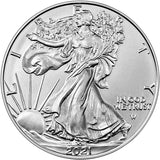
- American Gold Eagle (1 oz) — the most recognized U.S. sovereign bullion coin. It's 22-karat (.9167 fine), alloyed with silver and copper for durability, yet still holds a full troy ounce of gold. Its recognition means it tends to trade with tight spreads and easy resale.
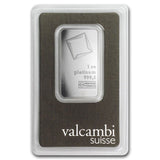
- 1 oz Valcambi Gold Bar — a standard one-ounce bar from a recognized Swiss refiner. Bars like this usually carry a lower premium than coins, so you get slightly more metal per dollar, with the trade-off of being marginally less flexible to sell in part.
- 10 oz Valcambi Gold Bar — a larger bar that typically carries an even lower per-ounce premium, favored by buyers placing more capital at once. The trade-off is divisibility: a 10-oz bar sells as a single unit, so it suits accumulation more than piecemeal liquidation.
Notice the pattern: coins cost a little more but are the easiest to sell in any quantity; larger bars cost less per ounce but are chunkier to unwind. Which fits depends on how you plan to hold and eventually sell — not on which has the smallest sticker premium. The real cost of ownership is the bid-ask *spread*, not the premium alone, so it's always worth asking a dealer's published buy-back price before you buy.
A Note on Silver
The mention of silver in the same breath as gold surprises some clients, because silver has traditionally been treated as the more volatile, more industrial cousin. That reputation is earned — silver tends to swing harder in both directions. For a first-time buyer, the practical starting points are widely recognized sovereign coins and standard bars from recognized refiners. Just know that silver's bid-ask spreads run wider than gold's, and premiums can spike sharply in periods of supply stress. It's a legitimate diversifier; it simply behaves differently.
An International Footnote
One quiet reason this shift feels global: it *is* global. Poland's central bank was the single largest official buyer in 2025, adding over 100 tonnes and lifting gold to roughly a quarter of its reserves. When a government treats gold as a core reserve asset rather than a relic, it reframes the whole conversation — and that reframing eventually reaches the private wealth desks calling their clients.
Where Alex Lexington Fits
We're a family-run precious metals and fine jewelry house in the Atlanta metro, with roots tracing to 1977 and three generations in the industry. We don't manage portfolios and we don't tell anyone what percentage to hold — that's your advisor's job, and now, apparently, they're doing it.
What we do is the part that comes *after* the decision: helping people who've chosen to own physical gold or silver understand premiums, bid-ask spreads, and the difference between a sound sovereign coin and an overpriced "rare" one. We offer live spot-tied pricing, published buy-back rates, and segregated, insured vault storage for those who'd rather not keep metal at home. If your advisor's call has you curious, a consultation is a no-pressure way to learn the mechanics before you commit a dollar.
Frequently Asked Questions
Why is my financial advisor suddenly recommending gold when they used to be against it? Most likely because the underlying data shifted. Central banks have bought gold at well-above-average rates for several years, and major institutions like UBS now publish specific allocation recommendations (about 5%) framed around diversification and hedging. It's generally a recalibration to changed market conditions rather than a change of heart — but it's fair to ask your advisor directly why the number moved.
How much gold should I actually own? There's no universal figure. UBS cites about 5% of a balanced portfolio; State Street's research supports 2–10%, leaning to 2–5%; many advisors reference a 5–10% band. The right amount depends on your goals, time horizon, and risk tolerance — a suitability question for your own financial advisor, not a number to copy from an article.
Should I buy coins or bars if I go physical? Both are valid. One-ounce sovereign coins like the American Gold Eagle carry slightly higher premiums but offer the best liquidity and tightest bid-ask spreads. Bars — such as a 1 oz or 10 oz Valcambi — carry lower premiums, so you get more metal per dollar, but larger bars sell as a single unit, which suits accumulation more than piecemeal selling.
Should I buy the ETF my advisor suggested or physical metal? Both are legitimate. Physically-backed ETFs (GLD, IAU) are convenient and liquid but are shares in a trust, not metal in hand. Physical metal is a tangible asset with no counterparty, which matters more to some buyers than others. Notably, the IRS taxes both as "collectibles" at a top 28% long-term rate, so the tax treatment is similar.
Is it too late to buy gold if everyone's recommending it now? No one can reliably call a top or a bottom, so "is this the moment?" isn't really answerable. Many buyers who want exposure use dollar-cost averaging — buying fixed amounts on a set schedule — to avoid trying to time a single entry point. Whether gold belongs in your plan at all is the conversation to have with your advisor.
Does gold really protect against inflation and market stress? Historically, gold has shown low correlation with stocks and bonds, and State Street's research found it reduced portfolio drawdowns during major stress events. That's the diversification case. The counterargument, from Morningstar and Vanguard, is that gold produces no yield or income. Both views are legitimate — which applies to your situation is a decision for you and your advisor.
*Disclosure: Alex Lexington is a precious metals and fine jewelry dealer, not a registered investment adviser, broker-dealer, or financial planner. This article is educational and is not investment, tax, or legal advice, nor a recommendation to