







What Is the Spot Price of Gold? How It's Set and Why It Moves
WHAT IT MEANS
The spot price is the current market price for one troy ounce of a precious metal — gold, silver, platinum, or palladium — available for immediate delivery. It is the baseline number that every dealer, refinery, and exchange in the world uses to price bullion products.
When a headline says "gold hits $2,900 an ounce," that number is the spot price. It changes throughout the trading day, every day global markets are open, reflecting the collective activity of futures exchanges, central banks, institutional traders, and wholesale dealers worldwide.
Think of it as the wholesale benchmark. Just as crude oil has a posted price before it becomes gasoline at your local station, the spot price is the raw cost of metal before any dealer, mint, or logistics cost is added.
WHY IT MATTERS FOR INVESTORS
The spot price is not set by any single authority. It emerges from two primary mechanisms.
Futures markets drive most of the action. The COMEX division of the New York Mercantile Exchange trades gold and silver futures nearly around the clock. The front-month contract — the nearest active delivery date — is what most data providers reference as the spot price. Hundreds of thousands of contracts trade daily, representing billions of dollars in notional value.
Twice each business day, members of the London Bullion Market Association conduct an electronic auction to establish the LBMA Gold Price. This London Fix is used globally for settling contracts, valuing reserves, and pricing physical transactions between banks, refineries, and large dealers.
Several forces push gold's spot price higher or lower on any given day. Interest rates and monetary policy matter because gold does not pay dividends — when central banks lower rates, the opportunity cost of holding gold decreases and the price tends to rise. Inflation expectations drive demand because gold has served as a store of value for thousands of years. Geopolitical uncertainty pushes investors toward assets with no counterparty risk. Currency strength affects gold because it is priced in US dollars globally — a weaker dollar makes gold cheaper for international buyers. And central bank purchases create sustained upward pressure when major economies accelerate their gold buying.
HOW IT CONNECTS TO PRECIOUS METALS
Here is where many first-time buyers get confused: the spot price is not the price you pay for a coin or bar. Every physical product carries a premium above spot.
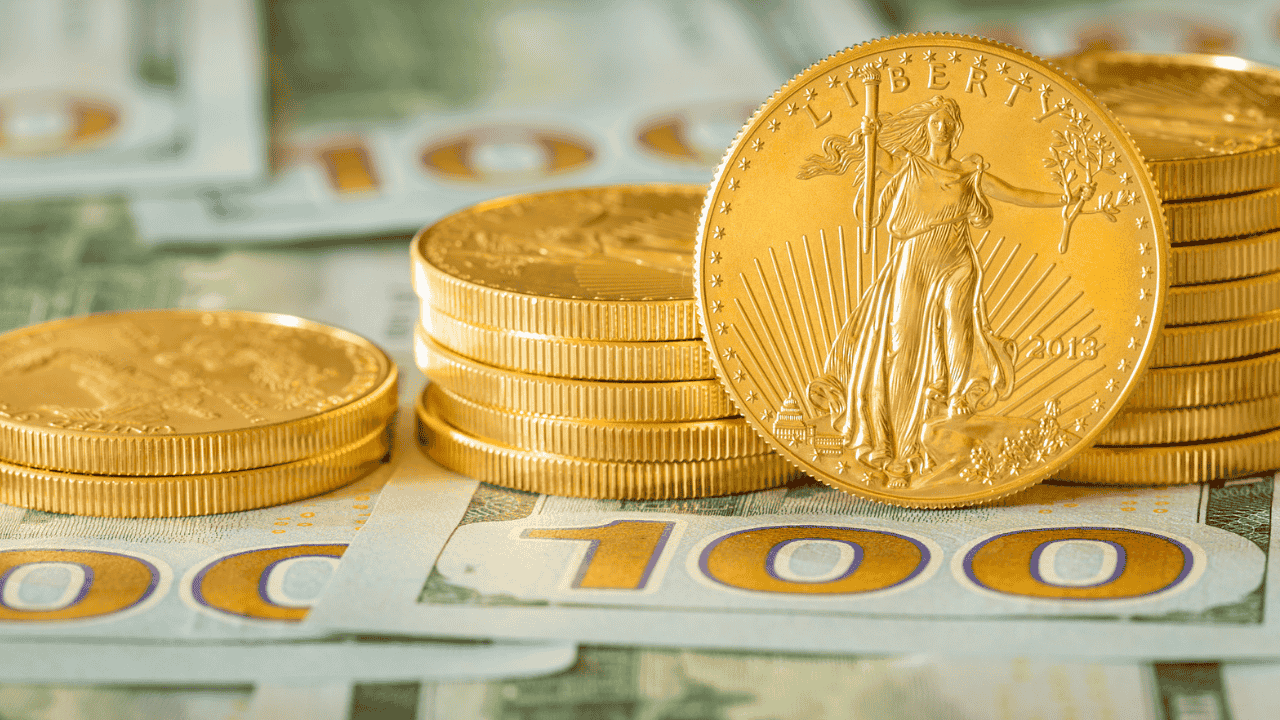
That premium covers minting costs, refining and assay verification, distribution from mint to dealer, and the dealer's margin for maintaining inventory and expertise. For a 1 oz American Gold Eagle, the premium typically runs 3–5% over spot. Smaller fractional sizes carry higher percentage premiums because fixed minting costs are spread over less metal. Silver products generally carry higher percentage premiums than gold because the per-ounce value is lower while handling costs stay similar.
When markets are calm and supply is abundant, premiums compress. During periods of high demand — a financial crisis, a geopolitical shock — premiums can spike above 10% as retail demand overwhelms available inventory.
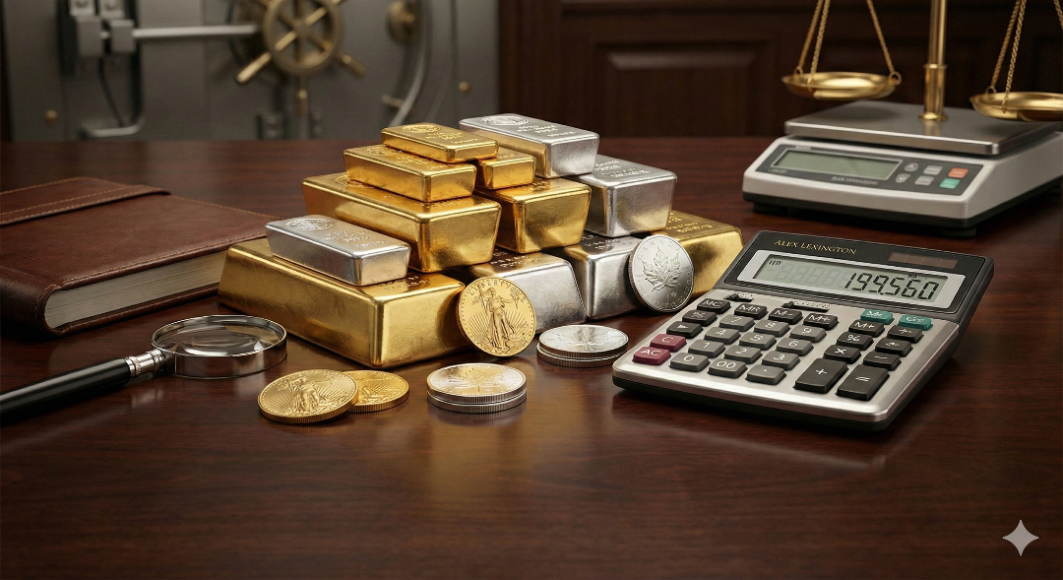
Understanding spot price gives you three practical advantages. You can evaluate any dealer's pricing by calculating the premium they charge. You can time purchases strategically by understanding what drives price. And you always know what your holdings are worth — 10 oz of gold at $2,900 spot is $29,000 in melt value, updated in real time with no appraisal needed.
THE BOTTOM LINE
The spot price is the heartbeat of the precious metals market. Every transaction references it, every portfolio is valued against it, and every informed investor watches it. It does not tell you the full cost of acquiring physical metal — premiums add to that — but it gives you the foundation to make smart, transparent decisions.
At Alex Lexington, live spot prices for gold, silver, platinum, and palladium are displayed across our platform. When you request a quote, the price is built from the real-time spot rate with our margin clearly disclosed.
RELATED TERMS
Premium (Over Spot) | Troy Ounce | COMEX | LBMA | Bid/Ask Spread
DISCLOSURE
Alex Lexington provides this content for educational purposes only. This is not investment advice. Precious metals prices fluctuate and past performance does not guarantee future results. Consult a qualified financial advisor before making investment decisions. Alex Lexington is a licensed precious metals dealer, not a registered investment advisor.