


Gold
—








%0A$4,674/oz%20(up%20approximately%20...)
Gold and Silver Surge as Dollar Breaks Below 98 — Why We're Still Watching, Not Acting
THURSDAY, MAY 7, 2026 · ATLANTA, GA
ALEX LEXINGTON
THE DAILY MARKET INTELLIGENCE EDITION
MARKET SNAPSHOT
| Gold Spot (XAU/USD) | $4,674/oz (up approximately +$116 to +$150, +2.5% to +3.2% from prior close) — intraday high $4,703; London session confirmed the breakout above $4,650 before US open |
| Silver Spot (XAG/USD) | $75.75/oz (up approximately +$1.94, +2.7% from prior close ~$73.81) — outperforming gold on the session; higher industrial beta amplifying the directional move |
| Gold/Silver Ratio | 61.7:1 — compressed from 62.4:1 on May 4; silver outperformance on directional metals rallies is the normal pattern; well below the 80+ historical level where silver reads as cheap relative to gold |
| Brent Crude | $110.09/bbl (down approximately -3.8% from prior close $114.44) — Iran peace progress unwinding the Strait of Hormuz risk premium; crude and gold moving in opposite directions on the same news |
| DXY (US Dollar Index) | 97.89 (down -0.61%) — decisively below 98.00; intraday range 97.63–98.51; the dollar break below this level is the cleanest single signal of the session; still above the 52-week low of 95.55 |
| 10-Year Treasury Yield | 4.37% (down 0.06 percentage points from prior session) — modest easing aligned with dovish-shift narrative; real yield compression mechanically supports non-yielding gold |
| S&P 500 (SPY) | $726.46 (intraday range $720.00–$727.03) — equities and metals rising in tandem on the same headline; this is a dollar-weakness regime, not a safe-haven rotation |
| VIX | 16.73 (down -3.74%) — well below the 20 stress threshold; risk appetite firming; today's metals rally is a relief bid, not a fear bid |
Today's cross-asset tape reads in a single direction. The FOMC's April 29 decision — an 8-4 vote that marked the most fractured Federal Reserve since October 1992 — set the backdrop. Three governor dissents on rate-path language, one dissent calling for an immediate 25bp cut, and Kevin Warsh's Senate confirmation vote expected the week of May 11 have collectively reset market expectations. CME Group FedWatch is now pricing a 28% probability of a June rate cut — up materially from prior sessions. That repricing is the dollar-weakness mechanism: when rate-cut probability rises, real yield expectations ease, and non-yielding gold becomes relatively more attractive. The dollar at 97.89 and gold at $4,674 are not a coincidence.
On the physical side, the People's Bank of China disclosed its 17th consecutive month of gold purchases in Q1, pushing total holdings to 2,313 tonnes — approximately 9% of China's total foreign exchange reserves, per World Gold Council data. The Shanghai Gold Exchange reported March withdrawals of 134 tonnes, a 57% month-over-month rebound, confirming that Asian physical demand is accelerating. Dubai's bullion market was trading at AED 560.00 per gram — cross-verifying at approximately $4,663.80/oz spot — evidence that Middle Eastern physical buyers are supporting the rally from underneath, not waiting for a pullback. Platinum closed up +3.09% and palladium +2.41%, confirming this is a broad precious and platinum-group metals bid, not a single-asset momentum trade. COMEX intraday volume was observed at approximately 6,240 contracts; full session data was not available at the time of this brief.
PHYSICAL BUY WINDOW
Status: WAIT
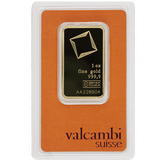
Gold spot at $4,674 with an intraday high of $4,703 puts the metal approximately at parity with recent highs — not pulling back from them. For clients buying 1-oz American Gold Eagles, Canadian Maple Leafs, Krugerrands, or Britannias, spot at this level plus typical dealer premiums of $120–$180 translates to approximately $4,794–$4,854 per coin. That is meaningfully above last week's range of $4,688–$4,748, and it approaches the upper end of the recent trading band.
The pullback that created last week's buy window — a 3.4% multi-day decline from the April 13 high — has been largely repaired in a single session. Today is the rebound, not the dip. The cleanest re-entry signals for tactical buyers would be (1) a 1.5–2.5% gold pullback over the next week without a geopolitical reversal, or (2) the Iran peace deal moving from diplomatic progress to a signed agreement alongside a CPI print that comes in at or below consensus on May 12. Either combination converts a speculative relief rally into a sustained directional regime worth front-loading.
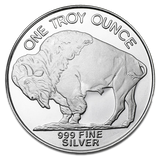
At today's spot $75.75/oz, typical retail premiums of $3–$5 on 1-oz silver Eagles, Maples, Britannias, or 90% junk silver put all-in cost at approximately $78.75–$80.75/oz — a meaningful pop from May 4's $76.78–$78.78 range. The World Gold Council has confirmed silver is heading for its sixth consecutive annual market deficit. The India administrative standstill is choking 8+ tonnes of silver supply at customs alongside the gold. The structural deficit story is intact. But today is not a buy-the-dip moment. It is a directional rally.
For DCA buyers on a scheduled program, today's session data does not alter the structural basis behind systematic accumulation — though each individual's decision to continue, adjust, or pause depends on their own goals and timeline. At $4,674 gold and $75.75 silver — a single-session move of 2.5–3.2% — this is not where the journal has historically identified opportunistic buy windows. The pattern documented since 2026-03-10: the cleanest entries follow pullbacks, not breakouts. The window will close and reopen.
OPINION
This is a day where the hardest discipline is doing nothing, and today's brief is built around explaining why.
Gold moved +2.5% to +3.2% intraday. In most markets, on most days, a move of that magnitude in a single session triggers a mean-reversion signal — the expectation that a sharp directional move creates conditions for a snap-back. That signal fired today on the numbers. I am not acting on it, and the reasoning matters more than the fact.
The framework distinguishes between a move driven by noise and a move driven by signal. Noise is random price action searching for direction. Signal is a directional regime shift driven by a change in the underlying drivers. Today's move is signal. Four independent factors aligned simultaneously: U.S.-Iran diplomatic progress — confirmed by a Trump statement, Secretary Rubio's public confirmation, and Operation Epic Fury concluded with the ceasefire intact — removed a geopolitical tail-risk premium that had been suppressing directional conviction for weeks. The dollar broke below 98 on Fed dovish-shift repricing. Real yields eased. And physical demand confirmation arrived from three continents — China's PBOC, Dubai's bullion market, Perth Mint reporting +131% month-over-month sales — in the same 24-hour window. That is not noise. That is a directional regime shift.
The complicating factor is the Iran deal itself. No agreement has been signed as of this brief. Iran's 14-point proposal includes demands — sanctions removal, frozen-asset releases, Strait of Hormuz mechanisms, U.S. force withdrawal — that carry real political friction in Washington. The rally is pricing a diplomatic outcome that has not yet materialized. If re-escalation occurs, gold gives back a portion of today's gain rapidly. That reversal risk is why sentiment sits at 6/10 BULLISH, not 8/10. The market has not fully priced the deal; there is room for the move to extend, but also room for it to reverse.
The oil read deserves a sentence: Brent fell nearly 4% today on the same Iran peace news that drove gold higher. Crude and metals are responding to the same geopolitical signal through different channels — oil losing its Hormuz risk premium while gold gains from the dollar-weakness and rate-repricing channels that follow geopolitical de-escalation. Both reactions are rational. The dollar-weakness channel dominated for gold today, and that is what matters for the metals thesis.
The practical conclusion: the SLV position opened on March 31 remains open at +2.94% unrealized and is the binding constraint on any new metals layer this week. But even without that constraint, the setup here is to wait for the pullback, not to chase the breakout. Trading discipline is recognizing what kind of move you are in. Trending markets punish fading. The cleanest entry in a trending market is the retracement, not the continuation. We are at the continuation. We wait.
FORWARD OUTLOOK
CPI releases Tuesday, May 12 at 8:30 AM ET — this is the primary catalyst for the rest of the week and the dominant binary event for any new metals entry. This release incorporates a CPI series rebase to December 2024 = 100, which will add technical noise to the print interpretation; watch the year-over-year figure, not the index level, for the relevant read. Fed-speak from any of the four FOMC dissenters this week could move gold sharply in either direction before CPI arrives. Kevin Warsh's Senate confirmation vote, expected the week of May 11, adds further Fed-leadership uncertainty. On the geopolitical side, any update on the Iran peace deal — progress toward a signed agreement or signs of breakdown — is the single variable most likely to override the technical setup between now and Friday. Watch the LBMA London PM Fix in the $4,636–$4,680 range as the short-term technical anchor; a close materially above $4,700 would confirm the directional regime; a close below $4,600 would reopen the physical buy window.
DISCLOSURE
This content reflects disclosed trading activity and market analysis for educational purposes. Alex Lexington does not manage client funds or provide personalized financial advice. Past performance does not guarantee future results. Always consult a licensed financial advisor before making investment decisions.---