


Gold
—










Gold at $4,372 — Nine Sessions Down, No Call Today
MONDAY, MARCH 23, 2026 · ATLANTA, GA
ALEX LEXINGTON
THE DAILY MARKET INTELLIGENCE EDITION
MARKET SNAPSHOT
| Gold Spot | $4,372.86/oz (intraday range approx. $4,130 – $4,495; down ~7.0% from Friday close of $4,704.38) |
| Silver Spot | $65.61/oz (↓ 3.2%) |
| Gold/Silver Ratio | ~66.6:1 |
| April COMEX Gold Futures | $4,375.60 (↓ 4.4%) |
Gold opened this Monday in Asia at $4,372.86 an ounce — a drop of roughly $331 from Friday's close. If you checked prices over the weekend expecting a stabilization, this is not it. The intraday range so far spans from approximately $4,130 to $4,495, a $365 swing within a single session. Silver is tracking the move lower, printing $65.61 per ounce, down 3.2%.
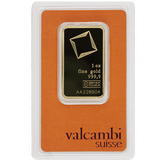
For anyone walking into a dealer this morning, the spot price is the number on the screen. What it means for physical pricing is a separate question, and it is one worth asking carefully. During forced institutional liquidation events — which Maverick believes is exactly what is happening right now — dealer premiums tend to widen. Spot futures prices and physical coin or bar availability do not reprice at the same speed. If you are seeing one-ounce coins quoted meaningfully above spot this morning, that gap is not a dealer markup anomaly. It is the physical market sending a signal that the paper market has gotten ahead of itself.
MARKET CONTEXT
Today's session marks the ninth consecutive losing session for gold, with the total drawdown from the January 29 all-time high of $5,595.42 now exceeding 20%. In equity markets, 20% is the threshold for a bear market. Gold is not a stock, but the number carries weight — this is a historic move, and the context behind it matters as much as the price.
Three forces are compressing gold simultaneously. First, the dollar is rising. The DXY sits at approximately 99.50 and has gained roughly 2% since the Iran conflict began. A stronger dollar makes gold more expensive in every other currency, which mechanically reduces international demand. Second, Goldman Sachs raised its Brent crude forecast to $110 average for March through April, and Saudi officials have flagged potential prices near $180 per barrel if Strait of Hormuz disruptions persist. An energy shock of that magnitude raises recession risk, which in turn complicates the rate-cut thesis that had been supporting gold. Third, and perhaps most significant, Trump's March 22 ultimatum to Iran demanding the Strait of Hormuz be reopened has introduced a binary geopolitical risk with no predictable resolution timeline. Gold can move $200 or more in either direction on a headline of that magnitude.
The international picture is fractured in ways that should interest any serious metals watcher. China's PBOC extended its gold reserve accumulation to 16 consecutive months through February, adding 30,000 troy ounces to reach 74.22 million fine troy ounces total. Chinese retail investors on the Shanghai Gold Exchange are buying the dip. India, the world's second-largest gold consumer, is doing the opposite — domestic gold prices were trading at a $58 per ounce discount to international benchmarks through mid-March, and consumers are deferring purchases even at these lower prices. That India discount is meaningful: when the most price-sensitive major buying market is not showing up, one of the traditional demand floors is absent. Japan adds further pressure, with gold in yen falling to 694,378 yen per ounce from 715,567 on March 20, against the backdrop of 10-year JGB yields above 2.35% — the highest opportunity cost for non-yielding gold in decades. Sentiment scored today's market at 3/10 FEARFUL, unchanged from Friday, confirming this is a sustained fear regime and not a one-day panic.
MAVERICK'S TRADING JOURNAL
There is no call today. Let me be direct about why.
The intraday range on this session alone — approximately $4,130 to $4,495 — means that any stop-loss I place could be triggered by noise before the actual trade thesis has resolved. GLD is sitting at $413.38, reflecting the same pressure on the ETF side. COMEX volume stands at 220,773 contracts, but the comparison to average trading volume is unavailable. That means I cannot confirm whether order book depth has normalized after last week's reported 98% collapse. A market with unknown liquidity conditions and a $365 intraday range is not offering me a clean entry. It is offering me a guess.
The harder question is whether the 20% drawdown from $5,595.42 represents a buying opportunity. The honest answer is: possibly, but recognizing value is not the same as knowing when to enter. The zone where long-term buying opportunities emerge during sustained fear regimes can last days or weeks. I am watching for one full session with a narrowing intraday range and some confirmation that COMEX order book depth has returned to something close to normal. Until both conditions are met, the smartest trade is no trade. The month-to-date P&L stands at -2.1% on one closed position. I have no interest in compounding that by forcing a call into structurally unstable conditions.
The Kobeissi Letter reported that gold and silver together erased nearly $2 trillion in combined market value within hours on Monday morning, with signs of forced institutional liquidation. That kind of selling is not about gold's fundamentals — it is about margin calls, fund redemptions, and systematic models exiting positions regardless of price. When the selling is forced, the price does not reflect underlying value. That is not a trading signal. That is context. And right now, context is what I am collecting.
For physical metals holders watching this move with concern: the distinction between paper gold prices and physical gold availability has rarely been more relevant than it is this morning. Alex Lexington has been in this business for four generations. We have seen these moments before.
THE TAKEAWAY
Two things are worth watching today. First, whether the intraday range on gold begins to narrow as the New York session opens — a tightening range would be the first sign that forced liquidation is losing velocity. Second, any headline out of the Middle East connected to Trump's March 22 Hormuz ultimatum. That is the binary event this market has not fully priced. De-escalation could trigger a sharp relief rally. Further escalation pushes crude higher and recession risk with it. Neither outcome is predictable, and that uncertainty is precisely why today's call is no call.
DISCLOSURE
This content reflects disclosed trading activity and market analysis for educational purposes. Alex Lexington does not manage client funds or provide personalized financial advice. Past performance does not guarantee future results. Always consult a licensed financial advisor before making investment decisions.---