


Gold
—




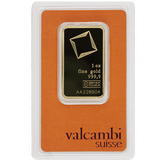




%0A$4,073.72/oz%20(down%20$57.11,...)
Silver and Gold Reverse as Oil's Surge Feeds Rate Fears — What Buyers Need to Know Before FOMC
THURSDAY, JULY 23, 2026 · ATLANTA, GA
ALEX LEXINGTON
THE DAILY MARKET INTELLIGENCE EDITION
MARKET SNAPSHOT
| Gold Spot (XAU/USD) | $4,073.72/oz (down $57.11, -1.38% from prior close) — rejected at $4,128–$4,113 resistance; London confirmed the reversal after overnight Asian session bid to $4,141 |
| Silver Spot (XAG/USD) | $58.34/oz (down $1.53, -2.56% from prior close) — amplifying gold's directional move at 1.86x factor; broke back below the 100-period SMA near $58.98 |
| Gold/Silver Ratio | 69.83:1 — widened from 69.21 yesterday as silver underperformed on the reversal; above the 50-year historical average of ~60; swap window marginally more favorable for silver today than yesterday |
| Brent Crude | $98.89/bbl (up $5.07, +5.13% from prior close) — fifth consecutive session of gains on Houthi attacks on Saudi oil tankers; US-Iran Strait of Hormuz standoff now in its 12th consecutive day |
| WTI Crude | $90.83/bbl (up $3.87, +4.45% from prior close) — geopolitical premium intact and expanding across both benchmarks |
| DXY (US Dollar Index) | 101.40 — breaking above key 101 resistance on the 10-year yield surge; direct headwind for gold; range 100.94–101.40 intraday |
| 10-Year Treasury Yield | 4.71% (+4.5bps from prior session) — threatening 19-month high breakout; oil-driven inflation expectations feeding rate-hike narrative ahead of FOMC July 28–29 |
| S&P 500 (SPY) | $747.41 (down $0.87, -0.12% from prior close) — essentially flat; equities holding while metals sell off confirms this is a rate-narrative pullback, not a broad risk-off event |
| VIX | ~17.00 — below the 20 stress threshold; reduced fear environment despite active geopolitical escalation |
| Platinum | $1,606/oz (down -1.89% from prior close) — all major precious metals declining in tandem |
| Palladium | $1,245/oz (down -2.43% from prior close) — breadth of pullback confirms rate-narrative driver, not metal-specific |
The session divergence is clean and instructive today. The Asian overnight session drove gold toward $4,125–$4,141 on continued US-Iran geopolitical tension and fresh China-Taiwan Strait live-fire drills. The Shanghai Gold Exchange premium held at approximately +$17/oz above COMEX, reflecting ongoing physical demand from Chinese buyers who interpret pullbacks as accumulation opportunities. London reversed the bid at the documented $4,128–$4,113 resistance zone once Brent crude clearing $97 became the session's dominant narrative. The US session confirmed the reversal. By 8:35 AM EST, gold was trading at $4,072–$4,084 — a clean three-session sweep with Asia bidding and the West selling into strength.
The CFTC's most recent Commitments of Traders report shows managed money net long positions in COMEX gold falling to 186,700 contracts (from 194,200 the prior week), a reduction of 7,500 contracts indicating continued speculative liquidation. GLD ETF weekly flow showed a $446.8M inflow for the week of July 16, but July's partial-month net flow sits at approximately -76.44 tonnes through July 17 — a bifurcated picture with mid-month inflows amid a broader monthly outflow. COMEX intraday volume for July 23 was unavailable from verified sources at time of publication.
---
MARKET CONTEXT
There is a paradox sitting at the center of today's tape, and it is worth slowing down to explain it clearly.
Oil is up +5.13% Brent. Geopolitical tension is at its highest level in weeks. Houthi forces have hit Saudi oil tankers in the Red Sea for a twelfth consecutive day, and the US-Iran Strait of Hormuz standoff is active and escalating. Under the standard framework — the one most financial media reaches for instinctively — this should be a strong day for gold and silver. Geopolitical risk drives safe-haven demand. Oil inflation drives inflation hedges. The model says metals should be up.
They are not. Gold is down $57. Silver is down $1.53. Every major precious metal is in the red.
The explanation is the inflation-into-rates transmission channel, and it is one of the most important concepts a physical metals buyer needs to internalize. When a supply-driven oil shock hits — specifically the kind created by geopolitical disruption rather than consumer demand — the Federal Reserve's reaction function processes it as a potential inflation threat. Bond markets price in that reaction before the Fed acts. Today, the 10-year Treasury yield climbed 4.5 basis points intraday to 4.71%, threatening its highest close in 19 months. CME FedWatch probabilities shifted materially: from 83.4% probability of a hold at the July FOMC meeting (as of July 21) to a separate 46.5% probability of a 25-basis-point hike now circulating in the market.
Gold pays no yield. When Treasury yields rise, gold's opportunity cost rises with them. The result is a mechanical headwind that today overwhelmed the geopolitical safe-haven bid. This is not a new phenomenon, but today's version is unusually clean: oil up more than 5%, equities essentially flat at -0.12%, and metals down across the board. The risk-off rotation is absent. This is a rate-narrative repricing event.
The jobless claims print for the week ended July 18 came in at 187,000 — down sharply from 209,000 the prior week and among the tightest labor market readings in recent months. Strong jobs data reinforces the argument that the Fed has room to hike. That print landed this morning and added to the rate pressure.
The structural picture underneath this tactical noise has not shifted. The People's Bank of China has now accumulated 75.44 million troy ounces — 2,346 tonnes — over 20 consecutive months of buying, with June's addition of 14.93 tonnes being the largest single-month purchase since 2023. The World Gold Council's most recent data confirms that gold has overtaken US Treasuries as the largest single category of global central bank reserves, now representing 27% of global official holdings versus 20% just one year ago. In Hong Kong, the new Delivery Connect system linking the Hong Kong Gold Exchange and the Shanghai Gold Exchange became operational on July 7, and HKGX USD-denominated gold futures hit a record 6,676 contracts on July 6 — more than double the prior record of 3,039 from November 2022. In Germany, political figures including EU Parliament member Markus Ferber are intensifying calls to audit and repatriate the approximately 1,200 tonnes of Bundesbank gold held at the Federal Reserve Bank of New York, a direct consequence of deteriorating US-Europe relations over the Greenland dispute.
The sovereign accumulation channel is structurally the most powerful multi-year signal in the complex right now. Today's Western paper-channel selloff sits on top of that floor — it does not dislodge it.
---
MAVERICK TRADING JOURNAL
No new trade signal fired today. Gold's -1.38% move is below the 2–3.5% acute threshold required to trigger a mean-reversion entry. Silver's -2.56% move is below the 4–6% threshold for silver. Neither metal cleared the level that would justify a fresh position, and with FOMC arriving in six trading days, the event-risk framework is approaching the point where new directional exposure becomes difficult to defend regardless of signal strength.
The more operationally urgent item today is position management. The GLD CALL opened June 26 at $366 entry is now confirmed at $379.00 — Sentinel verified an intraday range of $374.00–$382.22 across multiple sources — placing the position approximately +3.55% above entry and $2 above the documented $377 target. This is the second consecutive session where the position has been at or above the target zone, and the first session where that print is confirmed rather than estimated. The framework is clear: when a position has confirmed-touched its documented target while a scheduled binary event is approaching the hard-bind window, the disciplined action is to close, document the result, and re-enter after event clearance. Three trading sessions remain before the FOMC event-risk protocol tightens further on Monday–Tuesday.
The SLV BUY position opened March 31 at $64.03 continues to carry at approximately -15.44% unrealized, based on SLV's last confirmed price of $54.14. Silver's -2.56% reversal today modestly deteriorated that posture from yesterday's estimated range. The Silver Institute's projection of the sixth consecutive annual supply deficit — 46.3 million ounces for 2026, widening from 40.3 million in 2025 — remains the structural thesis underlying that position. Today's tactical repricing does not alter the fundamental picture.
Track record on closed positions stands at 1 win and 3 losses. The GLD CALL, if closed at current levels, would be the second documented win.
---
THE TAKEAWAY
Gold has pulled back approximately 1.4% from yesterday's continuation high. Silver has pulled back 2.6%. Those are meaningful moves — but not deep enough to fire our mean-reversion entry signals, which exist precisely to keep us from chasing sub-optimal entry points. They do, however, partially reopen the acute-buy window that Tuesday and Wednesday's rally had closed.
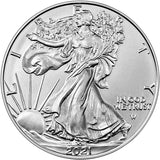
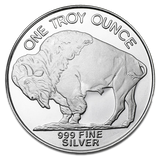
For physical buyers at Alex Lexington, the practical picture looks like this. One-ounce American Gold Eagles, Canadian Maple Leafs, and Krugerrands are running approximately $4,193–$4,254 all-in today, roughly $46–$56 per coin lower than yesterday's rally peak. American Silver Eagles are at approximately $63.34–$65.34/oz all-in. Ninety-percent junk silver bags land near $41.71 per dollar of face value before dealer premium — about $0.75–$0.85 lower per dollar of face value than yesterday's anchor.
These are better entry points than yesterday. They are not as favorable as the sub-$4,000 gold / sub-$55 silver window from last Friday and Monday's washout, which remains the most attractive physical buy window of the past month.
The framework's read heading into FOMC week: the physical buy window has partially reopened, but the binary event risk argues for patience. The CME FedWatch probability split — 83.4% hold versus 46.5% hike — tells you the market itself is uncertain about what happens next Tuesday. A hawkish forward-guidance outcome from Chair Powell could push gold back toward or below $4,000 and silver toward the $56–$57 zone, reopening the acute-buy window to Friday's depth. A dovish outcome closes this window materially higher through early August. Either way, the FOMC binary is the rate-determining event of the week. Any buyer acting ahead of the FOMC binary should be aware that it carries that event risk.
For customers already running a DCA schedule on silver or gold, today's reversal is exactly the kind of session a consistent interval is designed to absorb.
The gold/silver ratio at 69.83 is above its 50-year historical average of approximately 60. Silver remains historically undervalued on this metric, and today's ratio widening — as silver underperformed gold on the reversal — makes the case for silver accumulation marginally stronger than it was yesterday. The Silver Institute's sixth consecutive annual supply deficit in a world of growing solar panel and semiconductor demand is not a story that resolves in one quarter.
We have been in the Diamond District since 1977. We have seen oil price spikes feed rate fears that temporarily suppressed metals prices before the next leg higher materialized. The structural argument for owning physical gold and silver — central bank accumulation at a generational pace, six consecutive years of silver supply deficits, sovereign reserve rebalancing away from US Treasuries — is intact. Today's tape is a tactical headwind, not a thesis reversal.
---
DISCLOSURE
This content reflects disclosed trading activity and market analysis for educational purposes. Alex Lexington does not manage client funds or provide personalized financial advice. Past performance does not guarantee future results. Always consult a licensed financial advisor before making investment decisions.
---