


Gold
—









%0A$4,053/oz%20(up%20$4.80,%20+0.12%25%20intraday;%20Thursda...)
Silver Down 3.5%, Gold Holds $4,053 — Why the Fed Is Beating Geopolitics Right Now
FRIDAY, JULY 24, 2026 · ATLANTA, GA
ALEX LEXINGTON
MARKET PULSE EDITION
MARKET SNAPSHOT
| Gold Spot (XAU/USD) | $4,053/oz (up $4.80, +0.12% intraday; Thursday close down -1.98% from prior close) — partial stabilization after Thursday's sharp reversal; July 22 intraday high of $4,165 fading |
| Silver Spot (XAG/USD) | $57.64/oz (down approximately $0.79, -3.46% from prior close) — 1.75x amplification of gold's move; approximately -52% from January 2026 all-time high of $121.62 |
| Gold/Silver Ratio | 70.3:1 — widened from approximately 68:1 earlier this week; above 50-year historical average of ~60; silver-favored on relative-value basis |
| Brent Crude | above $100.00/bbl (up approximately +7-8% from prior close — Strait of Hormuz disruption premium; 12th consecutive night of US strikes on Iran) |
| WTI Crude | approximately $92.00/bbl — up approximately +30% month-to-date in July |
| DXY (US Dollar Index) | 101.30 — broke above key 101 resistance on four-session Treasury yield surge; range 101.25–101.47; resistance at 101.55 |
| 10-Year Treasury Yield | 4.70% — four consecutive sessions rising; highest since January 2025; primary transmission channel for Thursday's metals selloff |
| S&P 500 (SPY) | $738.79 (down -1.2% Thursday; session range $735.21–$745.83) |
| Nasdaq Composite | 25,137.69 (down -2.2% Thursday — tech-led selling) |
| VIX | 16.64 — below the 20 stress threshold; fear here is metals-specific rate-narrative pressure, not broad market panic |
Thursday's metals selloff was driven by a rate-narrative transmission event rather than conventional safe-haven dynamics. Gold dropped $77/oz from Wednesday's close of $4,124.89 to a Thursday close of $4,047.80 (-1.98%), while silver amplified the move to -3.46% — a 1.75x amplification ratio consistent with silver's historical behavior. CFTC Commitments of Traders data (as of July 14) showed managed money net long positions at 120,779 COMEX gold contracts and 11,501 COMEX silver contracts, both in decline, meaning Thursday's reversal likely accelerated further long liquidation. The Shanghai Gold Exchange premium held at +$2.24/oz above COMEX, signaling steady Chinese physical demand even as Western derivative positioning retreated. The World Gold Council documented $8.9 billion in global gold ETF outflows in June — the heaviest single-month redemption of the first half of 2026, led by North American institutional accounts — while Asian funds maintained record inflows through the same period, illustrating the paper-versus-physical bifurcation that has defined this market structure all year.
PHYSICAL BUY WINDOW
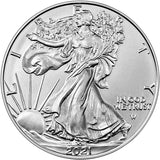
Thursday's -1.98% gold and -3.46% silver reversal has partially reopened the acute-buy window that Tuesday and Wednesday's rally had closed. Gold at $4,053/oz sits approximately $72 below Wednesday's high — a pullback of roughly 2.69% from the July 22 intraday peak of $4,165. For buyers of 1-oz American Gold Eagles, Canadian Maple Leafs, and Krugerrands, that translates to an all-in cost of approximately $4,173–$4,233 per coin at current dealer premiums — meaningfully lower than this week's peak, though still above the more favorable July 7 sub-$4,000 window. Silver at $57.64 sits $2.89/oz above earlier July's sub-$55 washout; American Silver Eagles run approximately $62.64–$64.64/oz all-in at current spot. 90% junk silver bags anchor at approximately $41.21 per $1 face value before dealer premium — lower than the $42-plus range earlier this week.
The buy window is partially reopened, not fully open. Gold's -1.98% Thursday pullback touches but does not cleanly cross the 2–3.5% acute-buy band; silver's -3.46% approaches but does not breach the 4–6% silver threshold. DCA interval customers should maintain their programs — Thursday's move rewards exactly the patience that dollar-cost averaging is designed to capture. For acute-buy customers, FOMC on July 28–29 is the key variable: a hawkish forward-guidance outcome could push gold back toward the July 7 sub-$4,000 window, while a dovish outcome would close the current window materially higher into August. Today's prices are measurably lower than this week's highs — the pullback data is in the numbers above. We have been in the Diamond District since 1977. We have seen these cycles before. Questions on the physical window? Call us.
OPINION
The central paradox of this week's tape is worth stating plainly. The US has conducted 12 consecutive nights of strikes on Iran. Houthi forces have hit Saudi oil tankers in the Red Sea. Brent crude has crossed $100 per barrel. By any conventional commodity-market logic, gold should be higher right now, not $77 lower from where it closed Wednesday.
And yet here we are at $4,053, with silver at $57.64, and the 10-year Treasury yield marching to 4.70% — its highest print since January 2025.
The explanation is not complicated once you see the mechanism. Oil at $100 is not just a geopolitical event. It is an inflation event. And the market's primary response to a fresh inflation shock in July 2026 is not "buy gold as an inflation hedge" — it is "reprice Fed rate-hike expectations." CME FedWatch data shows September rate-hike odds have surged to approximately 80%, more than tripling from below 53% just one week ago. That is the fastest one-week rate-narrative repricing in this tracked cycle. When the market front-runs a Fed expected to respond to oil-driven inflation by hiking rates, the 10-year yield rises, the dollar strengthens above key technical resistance, and non-yielding assets like gold get sold. Not because gold is fundamentally less valuable — but because the relative cost of holding it against a 4.70% 10-year yield has become more expensive overnight.
This is the dynamic I want readers to understand clearly: the safe-haven channel that would normally route geopolitical fear into gold is being overridden by the rate-narrative channel. It is not that gold has failed. It is that the macro transmission route is currently running through rates and the dollar rather than through the traditional metals-bid path. The VIX at 16.64 — well below the 20 stress threshold — confirms this is not a panic-driven selloff. It is a positioning event driven by Fed repricing.
Internationally, the bifurcation between the Western and Eastern channels has never been more pronounced. The People's Bank of China extended its gold-buying streak to 20 consecutive months in June, adding 14.93 tonnes — its largest single-month purchase since 2023 — bringing total holdings to approximately 2,346 tonnes. Hong Kong's Delivery Connect gold clearing system launched July 7, shifting incremental price discovery toward Asian time zones. The Shanghai Gold Exchange premium held at +$2.24/oz above COMEX this morning, signaling that Chinese physical demand is steady even as North American institutional money exits via ETF redemptions. China's largest banks also ended retail leveraged SGE gold trading effective July 24 — a deliberate narrowing of speculative channels while sovereign accumulation continues uninterrupted. The structural floor is being built by governments and central banks. The tactical volatility is being driven by rate-narrative repricing in New York.
FOMC meets Tuesday and Wednesday of next week, and the framework's hard-bind on new derivative entries engages Monday morning. That discipline reflects the practical reality that options positions held through Fed meetings face three simultaneous risks: implied volatility crush even when the trade moves in the right direction, binary uncertainty on the Fed's tone, and post-meeting reversal risk as the market's second read on Fed language often contradicts its first. The disciplined path is to resolve open positions before Monday's engagement point, watch the FOMC outcome with a clear eye, and re-enter after the rate picture resolves. Today is a day for watching and for physical buyers who understand that the structural floor — sovereign accumulation, six consecutive annual silver supply deficits, the world's central banks building reserves at a pace not seen since the 1970s — does not move because of a single Fed meeting.
FORWARD OUTLOOK
The defining event of next week is FOMC July 28–29. The Fed will release its rate decision and Chair Powell will hold a press conference; there is no updated Summary of Economic Projections at this meeting. CME FedWatch currently shows approximately 63.5–65% probability of a hold at 3.50–3.75%, with 35–36.5% probability of a 25-basis-point hike. September hike odds stand at approximately 80%. This morning's S&P Global Flash PMI provided a modest offset — Manufacturing improved to 49.3 from June's 46.0, and Services came in at 52.4 down from 54.4 — both readings that softly argue against the most aggressive rate-hike scenario. The ISM Manufacturing PMI for July releases at 10:00 AM ET today, a live data point during trading hours. Watch items for next week: whether the DXY holds above 101 resistance or fails back below it, whether Brent sustains above $100 on continuing Iran/Hormuz developments, and whether Thursday's gold bounce at +0.12% intraday extends into the close or fades into pre-weekend de-risking ahead of Monday's FOMC hard-bind. The next major inflation binary after FOMC is the July CPI print on August 12 and PPI on August 13.
DISCLOSURE
This content reflects disclosed trading activity and market analysis for educational purposes. Alex Lexington does not manage client funds or provide personalized financial advice. Past performance does not guarantee future results. Always consult a licensed financial advisor before making investment decisions.---