








%20is%20a%20financial%20pro...)
Gold ETF vs Physical Gold — Which Is Right for Your Portfolio?
WHAT IT MEANS
A gold ETF (exchange-traded fund) is a financial product that tracks the price of gold. It trades on a stock exchange like a share of stock. The most well-known, GLD, holds physical gold in vaults and issues shares representing fractional ownership of that gold. Other ETFs use futures contracts to track gold's price without holding physical metal at all.
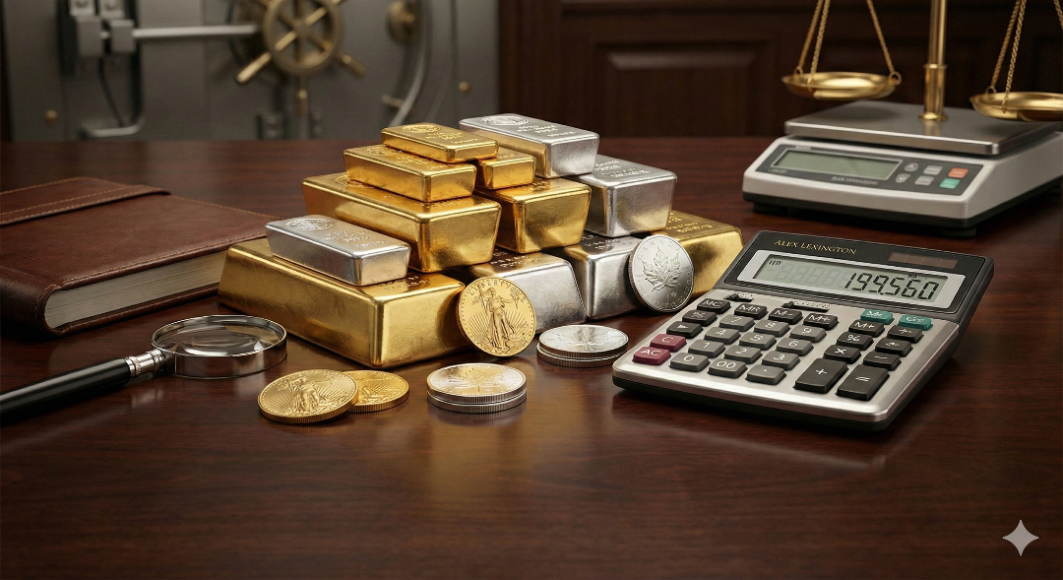
Physical gold means you own the actual metal — coins, bars, or rounds — stored in your possession, in a bank safe deposit box, or in a professional segregated vault. There is no intermediary, no counterparty, and no share structure between you and your gold.
Both approaches give you exposure to gold's price movement. The differences are in ownership structure, cost, risk profile, and what happens when you actually need the gold to do its job — protect wealth during a crisis.
WHY IT MATTERS FOR INVESTORS
The ETF vs physical debate comes down to what you are trying to accomplish.
ETFs offer convenience. You buy and sell through a brokerage account in seconds. There is no shipping, storage, or insurance to manage. Management fees are low — GLD charges approximately 0.40% annually. For short-term tactical positions or portfolio rebalancing, ETFs are efficient.
Physical gold offers sovereignty. You own the metal, not a share in a trust. There is no management fee eroding your position annually. There is no counterparty risk — your gold does not depend on the solvency of a fund manager, custodian, or clearinghouse. And in extreme scenarios — banking holidays, exchange closures, fund liquidations — physical gold in a vault is still yours.
The cost comparison is more nuanced than it appears. An ETF's 0.40% annual fee compounds over time: after 10 years, approximately 3.9% of your position has been consumed by fees. After 25 years, roughly 9.5%. Physical gold with segregated vault storage at Alex Lexington has an annual cost that ranges from 0.50% to 1.00% depending on portfolio value, but you own the actual metal with no compounding erosion of your shares.
Tax treatment also differs. ETF shares held longer than a year are taxed at the collectibles capital gains rate of 28%, not the standard long-term rate of 15–20%. Physical gold held over a year faces the same 28% rate, but depending on your state, there may be sales tax exemptions on physical metal that do not apply to ETF transactions.
HOW IT CONNECTS TO PRECIOUS METALS
The practical difference becomes clearest during market stress. In March 2020, gold ETFs experienced a brief but significant disconnect — the price of GLD shares diverged from the actual price of physical gold bars because authorized participants could not execute the arbitrage that keeps ETF prices aligned. Physical gold holders experienced no such disruption.
For Alex Lexington clients, the recommendation is straightforward: physical gold for the core position, with ETFs as an optional complement for tactical allocation. The core position — the metal you hold for wealth preservation, crisis insurance, and generational planning — should be physical, segregated, and in your name. If you also want to trade around gold's price for shorter-term opportunities, an ETF in a brokerage account serves that purpose without the friction of shipping metal.
The worst approach is relying entirely on an ETF for your gold exposure. In the exact scenario where gold is most valuable — financial system stress — the instrument that depends on the financial system to function may not perform as expected.
THE BOTTOM LINE
Gold ETFs are financial products. Physical gold is the asset itself. Both have a role, but they are not interchangeable. Build your core position in physical metal with transparent storage costs. Use ETFs for tactical flexibility if needed. Never substitute a derivative for the real thing when the purpose is protection.
RELATED TERMS
Contango | Segregated Storage | Spot Price | Counterparty Risk | Liquidity
DISCLOSURE
Alex Lexington provides this content for educational purposes only. This is not investment advice. Precious metals prices fluctuate and past performance does not guarantee future results. Consult a qualified financial advisor before making investment decisions. Alex Lexington is a licensed precious metals dealer, not a registered investment advisor.