






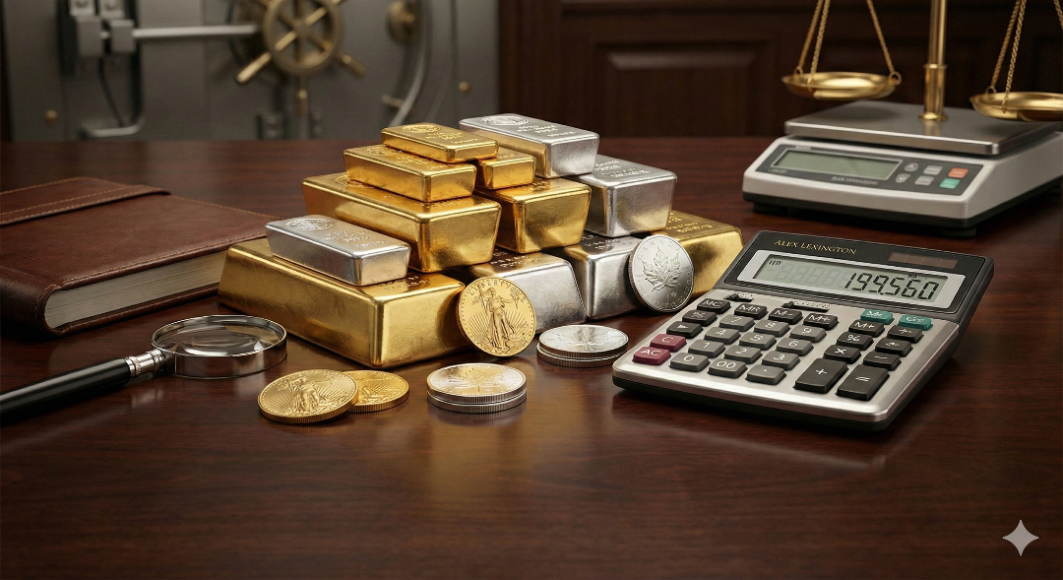



What Are Numismatics? Collectible Coins vs Bullion for Precious Metals Investors
WHAT IT MEANS
Numismatics is the study and collection of coins, tokens, and currency — but in the precious metals world, the term has a specific commercial meaning. A numismatic coin is one whose value exceeds its metal content because of rarity, historical significance, condition, mintage, or collector demand.
A 1 oz American Gold Eagle has a gold melt value based on the spot price — roughly $2,900 at current levels. That same coin in brilliant uncirculated condition commands a small premium over melt, making it primarily a bullion investment. But a rare date Saint-Gaudens $20 gold coin from 1907 in MS-65 condition might trade at $5,000 to $25,000 depending on the specific variety — far above its approximately 0.9675 oz gold melt value. The difference is numismatic premium.
The numismatic market operates on different fundamentals than the bullion market. Bullion prices move with spot. Numismatic prices move with collector demand, population reports (how many survive in a given condition), auction results, and long-term market cycles that may not correlate with gold prices at all.
WHY IT MATTERS FOR INVESTORS
The distinction between numismatic and bullion coins is one of the most important concepts for precious metals investors to understand, because the strategies, risks, and returns are fundamentally different.
Bullion coins — modern Gold Eagles, Maple Leafs, Buffalos, Krugerrands — trade at predictable premiums over spot. Their value rises and falls with the gold price. Liquidity is high because every dealer in the world quotes these products daily. The bid-ask spread is tight. You know what you own, and you can sell it quickly at a price close to the published spot.
Numismatic coins add a layer of subjectivity. Their value depends on grading, rarity, market trends, and the depth of collector demand for that specific coin. A Morgan dollar graded MS-63 by PCGS is worth a specific amount, but a raw, ungraded Morgan dollar from the same year and mint could be worth significantly more or less depending on the eye appeal and actual condition.
For investors focused on wealth preservation and metals exposure, bullion is the straightforward choice. The premium you pay over spot is the total cost of entry, and your return tracks the metal price. For collectors and those who appreciate numismatic history, rare coins can deliver returns that outpace the metal — but they require expertise, patience, and a different risk tolerance.
HOW IT CONNECTS TO PRECIOUS METALS
Alex Lexington operates across both worlds. Our bullion catalog covers investment-grade products — standard coins and bars priced transparently from spot. Our heritage in the New York Diamond District, dating to 1977, includes deep expertise in numismatic and pre-1933 US gold coins.
For clients using the INVEST vertical, bullion is the default recommendation. Metals exposure, liquidity, and transparent pricing serve the core goal of wealth preservation. For clients interested in numismatics, we provide guidance on grading, authentication, and the difference between coins with genuine numismatic value and those marketed at inflated premiums with dubious claims about rarity or future appreciation.
The most important warning in numismatics: not every old coin is numismatic. Telemarketers and high-pressure dealers sometimes sell common-date gold coins at numismatic premiums when they are really just bullion-grade pieces. Knowing the difference between a genuinely rare coin and a common coin in a fancy holder saves investors thousands of dollars.
THE BOTTOM LINE
Numismatics is a legitimate and fascinating branch of precious metals — but it serves different goals than bullion investing. Understand which approach matches your objectives before buying. Bullion for metals exposure. Numismatics for collecting and potential appreciation beyond the metal value. Never confuse the two, and be cautious of anyone selling common coins at collector premiums.
RELATED TERMS
Bullion | Premium (Over Spot) | Face Value | Proof vs Bullion | Karat vs Fineness
DISCLOSURE
Alex Lexington provides this content for educational purposes only. This is not investment advice. Precious metals prices fluctuate and past performance does not guarantee future results. Consult a qualified financial advisor before making investment decisions. Alex Lexington is a licensed precious metals dealer, not a registered investment advisor.