


Gold
—







What Is a Market Maker? Who Is on the Other Side When You Sell Gold
WHAT IT MEANS
A market maker is a firm that commits to quoting both sides of a market continuously — a price at which it will buy, and a price at which it will sell — regardless of which way the market is moving.
That commitment is the product. Without it, selling an asset means finding somebody who happens to want it, at the moment you happen to want to sell, at a price you both accept. With it, there is always a bid. The market maker earns the spread between its buy and sell price, and in exchange it carries the risk of holding inventory nobody else currently wants.
WHY IT MATTERS FOR INVESTORS
Gold's reputation as a liquid asset is really a statement about market makers.
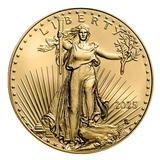
An ounce of gold is not liquid because of anything intrinsic to gold. It is liquid because there is a dense global network of dealers, refiners and bullion banks standing ready to bid on it at any hour a market is open. That network is the reason you can walk into a shop with a Gold Eagle and leave with money, rather than listing it somewhere and waiting.
This also explains why liquidity varies so sharply across products that contain identical metal. A one-ounce American Gold Eagle has a deep, competitive market — many firms want it, and the spread is tight. An obscure private-mint bar of the same weight and purity has a thinner one. Same gold, different number of people making a market in it, and the difference shows up entirely in what you are offered when you sell.
HOW IT CONNECTS TO PRECIOUS METALS
Three things this should change about how you buy.
Buy the liquid form unless you have a specific reason not to. Widely recognised sovereign coins and major-brand bars carry slightly higher premiums going in, and materially better bids coming out. Over a full round trip the recognised product usually costs less, which is the opposite of what the sticker suggests.
The spread is the price of the service. A dealer quoting both sides is warehousing risk — buying metal it may hold through a falling market. The spread compensates for that, and a firm that quotes a tight two-way price is generally one with the capital and hedging to carry the risk properly. An unusually wide spread is telling you something about either the product or the firm.
Ask whether a buyback is real. Many sellers of metal make no market in it afterwards. The meaningful question at the point of purchase is not whether they will buy it back in principle, but whether they quote a standing bid, in writing, against live spot. That answer is worth more than a small difference in the purchase premium.
THE BOTTOM LINE
A market maker is whoever is obliged to be on the other side of your trade. Gold's liquidity is not a property of the metal; it is a property of the network of firms that stand ready to bid on it.
The practical version: buy forms that many firms make a market in, treat the spread as the visible cost of being able to exit, and establish before you buy that the person selling to you will also quote you a price when you want out.
WHERE THIS APPLIES
See what we actually pay: the buyback calculator quotes against live spot, and offers are given in writing. Browse what we buy and sell both sides of.
RELATED TERMS
Bid-Ask Spread | Liquidity | Metal Premium | Sovereign Mint | Full glossary
DISCLOSURE
Alex Lexington provides this content for educational purposes only. This is not investment advice. Precious metals prices fluctuate and past performance does not guarantee future results.